
Shattila Ekadashi 2027 is Tuesday 2 February in India — and Monday 1 February in New York, London, Berlin and Mexico City
Shattila Ekadashi 2027 is Tuesday, 2 February in India and Russia — and Monday, 1 February in the USA, UK, Germany and Mexico. Parana times city by city, the six uses of sesame, and the katha of the woman and the lump of clay.
Shattila Ekadashi 2027 falls on Tuesday, 2 February in India and Russia — and on Monday, 1 February in New York, London, Berlin and Mexico City, where London and Berlin also list a separate Vaishnava fast on Tuesday 2 February. It is the Krishna-paksha Ekadashi of Magha, the one day of the year built entirely around a single seed: shat means six, tila means sesame, and the fast asks you to use sesame in six ways before the day is done.
That is the whole of it, and the rest of this page is the detail: the split, the afternoon Parana in London and Berlin that will catch people out, the six uses, and the story of the woman who fasted for a month and still got an empty house.
Shattila Ekadashi 2027 at a glance
| Fast, India / Russia | Tuesday, 2 February 2027 |
| Fast, New York / Mexico City | Monday, 1 February 2027 |
| Fast, London / Berlin (main) | Monday, 1 February 2027 |
| Vaishnava fast, London / Berlin | Tuesday, 2 February 2027 |
| Ekadashi tithi, Delhi | 8:41 AM Mon 1 Feb – 11:10 AM Tue 2 Feb |
| Ekadashi tithi, New York | 10:11 PM Sun 31 Jan – 12:40 AM Tue 2 Feb |
| Ekadashi tithi, London | 3:11 AM Mon 1 Feb – 5:40 AM Tue 2 Feb |
| Ekadashi tithi, Berlin | 4:11 AM Mon 1 Feb – 6:40 AM Tue 2 Feb |
| Ekadashi tithi, Mexico City | 9:11 PM Sun 31 Jan – 11:40 PM Mon 1 Feb |
| Ekadashi tithi, Moscow | 6:11 AM Mon 1 Feb – 8:40 AM Tue 2 Feb |
| Parana, Delhi | Wed 3 Feb, 7:08 – 9:19 AM |
| Parana, New York | Tue 2 Feb, 7:20 – 9:07 AM |
| Parana, London (main) | Tue 2 Feb, 1:10 – 3:01 PM |
| Parana, London (Vaishnava) | Wed 3 Feb, 7:36 – 8:20 AM |
| Parana, Berlin (main) | Tue 2 Feb, 1:20 – 3:04 PM |
| Parana, Berlin (Vaishnava) | Wed 3 Feb, 7:45 – 9:20 AM |
| Parana, Mexico City | Tue 2 Feb, 7:11 – 9:27 AM |
| Parana, Moscow | Wed 3 Feb, 8:20 – 10:06 AM |
| The month | Magha, Krishna Paksha (waning fortnight) — Pausha in the Amanta reckoning |
| The deity | Lord Vishnu with Goddess Lakshmi |
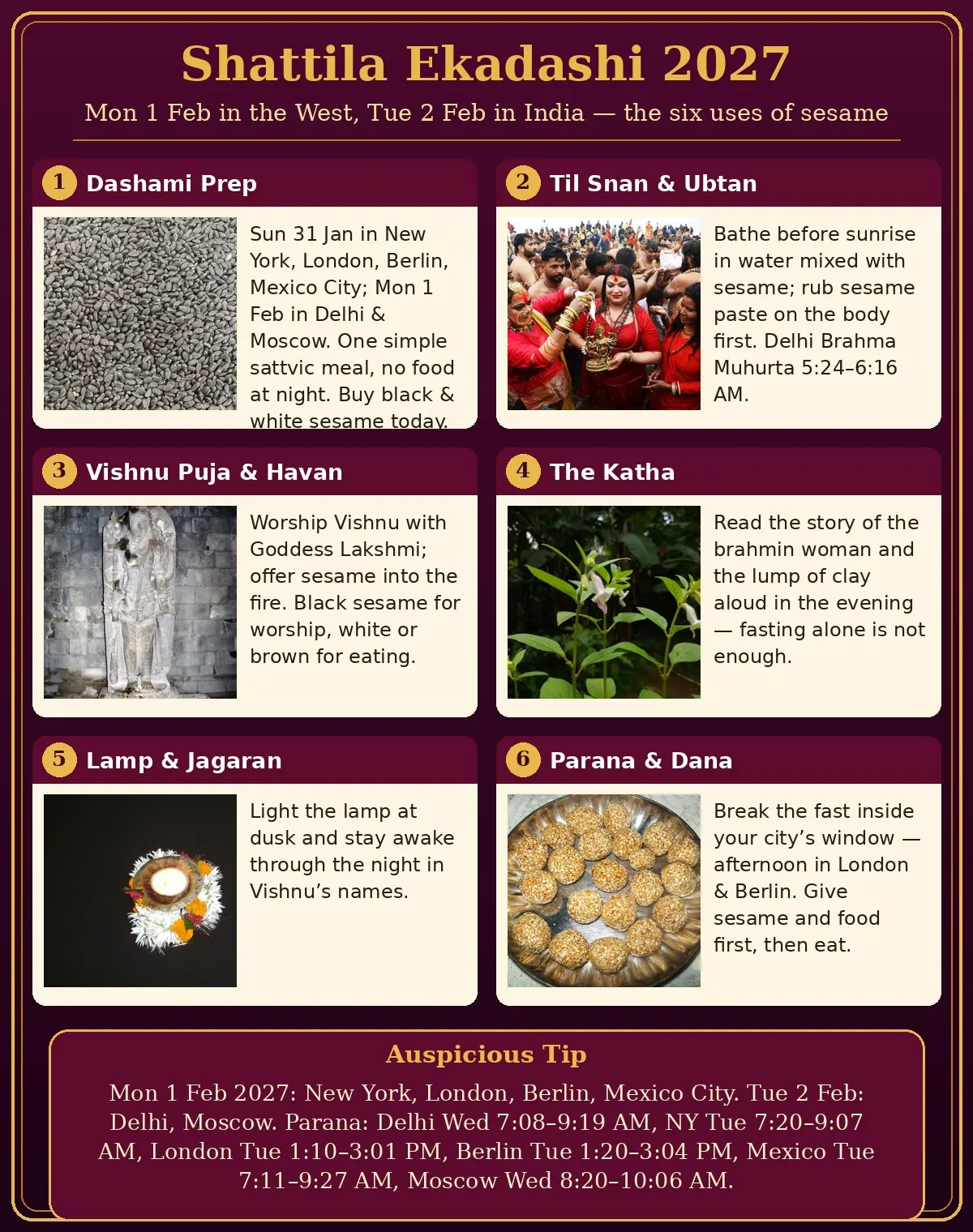
One wrinkle first, because it is the one that will catch people out. In London and Berlin the main fast does not break on Tuesday morning. The Ekadashi tithi ends early on Tuesday — 5:40 AM in London, 6:40 AM in Berlin — but Hari Vasara, the first quarter of Dwadashi, during which the fast must not be broken, runs past midday there: it ends at 12:20 PM in London and 1:20 PM in Berlin, so Drik puts the Parana in the afternoon — London 1:10 to 3:01 PM, Berlin 1:20 to 3:04 PM. Berlin's window opens exactly at its Hari Vasara end. Do not copy Delhi's Wednesday-morning Parana onto the London or Berlin main fast. It would be a day late, and a day late is a missed Parana — and do not break it on Tuesday morning either, because that falls inside Hari Vasara.
A second wrinkle, smaller. London and Berlin are the only two of the six cities where Drik lists a second fast: the Vaishnava Shattila Ekadashi on Tuesday 2 February, breaking on Wednesday morning — London 7:36 to 8:20 AM, Berlin 7:45 to 9:20 AM. Both windows close exactly when Dwadashi ends. If your temple follows the Vaishnava calendar, check its announcement; most ISKCON temples do. Delhi, New York, Mexico City and Moscow show no second fast at all on Drik.
And a third, about the calendar itself. Drik's own 2027 Ekadashi list shows no separate Vaishnava Shattila entry for Delhi or New York — the second date exists only for London and Berlin, on their festival pages. This page follows the festival pages, city by city, and says where each date comes from.
What Shattila means, and the six uses of sesame
Shattila joins shat, six, and tila, sesame. It is the only Ekadashi named after an ingredient, and the name is the whole instruction: on this day sesame is used in six ways. The list comes from the Padma Purana, where the sage Pulastya explains the vow to the sage Dalbhya, and it runs like this: bathe in water mixed with sesame, rub sesame paste on the body, offer sesame seeds into the sacred fire, offer water mixed with sesame to the ancestors, give sesame away in charity, and eat sesame.
One honest complication. The Bhavishya Uttara telling of the same day lists the six slightly differently: bathe, rub, offer into the fire, eat, give away — and, as the sixth, accept sesame as a charitable gift, instead of the water offering to the ancestors. The two lists agree on five of the six, and this page follows the Padma list, which is also the one most families actually keep: snan, ubtan, havan, tarpan, daan, bhojan. If your family's sixth use is receiving sesame rather than tarpan, you are keeping the same fast from the other telling.
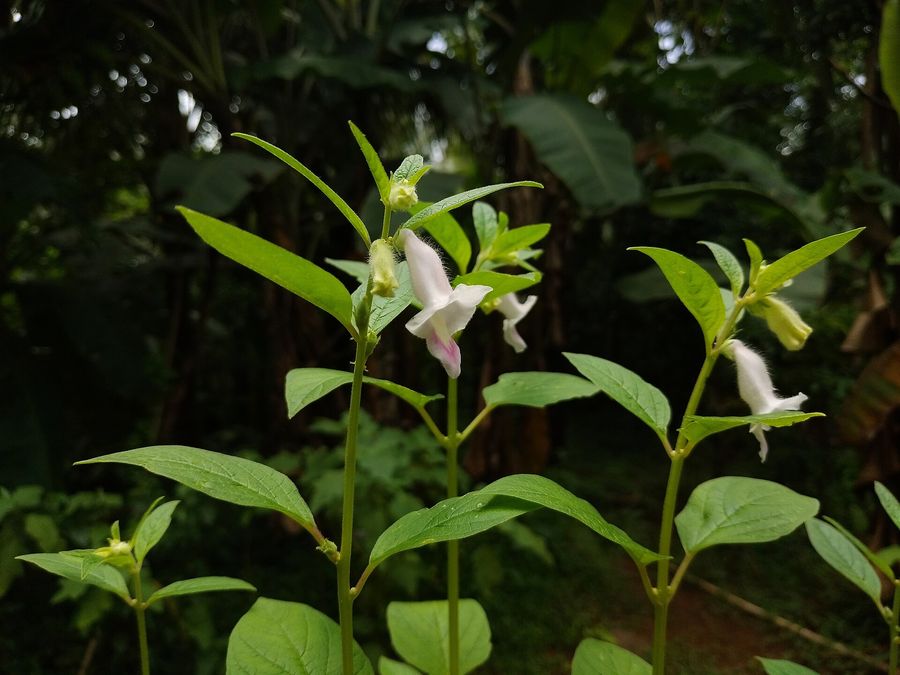
Black sesame is the kind the telling prescribes for bathing and for the fire; white or brown sesame is the kind meant for eating, and for giving to a brahmin to eat. That distinction is practical as well as scriptural — the black seed is bitter and oily, the pale seed is the one that goes into the ladoo. The photograph below is the plant itself, in flower: sesame grows tall and unassuming, and nothing about it suggests it would carry a whole festival.
It sits a fortnight after Pausha Putrada Ekadashi, which closed January, and it is the first Ekadashi of Magha — the month of the Magh Mela, when the cold is at its deepest and the sesame, the jaggery and the warm food are doing real work, not symbolic work. In North India it is also called Til Ekadashi, or Tilda Ekadashi, and the sesame-and-jaggery giving that families do around Makar Sankranti carries straight into it.
The katha: the woman who gave everything except food
The story is told as Krishna telling Yudhishthira, and the sources disagree on which Purana carries it — the Padma Purana in one telling, the Bhavishyottara Purana in another — and this page names the disagreement rather than picking one quietly. The story itself is the same in both.
Long ago there lived a brahmin woman, devoted to Krishna, who worshipped him every day with controlled senses. She kept vow after vow — the telling says she fasted for a month at a time until her body wore thin — and she honoured the gods, the brahmins and the young girls. She did everything right except one thing: she never gave food to anyone.
One day Krishna came to her himself, in the form of a beggar with a bowl. And she, annoyed at being asked, tossed a lump of clay into his bowl instead of food.
By the power of her vows she reached heaven when she died, and the lump of clay she had given earned her a fine house there — a beautiful house, and entirely empty. No grain, no wealth, nothing in it to eat. When she complained, Krishna told her to go home and not to open her door to the wives of the gods, who would come to see her, until one of them told her the Shattila vow.
One of them did. The woman kept the vow — the six uses of sesame, the fast, the giving — and her house was filled with grain and wealth, garments, gold and silver, and she became radiant. The telling adds that her ordinary body was transformed into a beautiful spiritual form. That is the whole story, and it is the reason this Ekadashi is the one about giving: the fast without the gift is a house with nothing in it.
The telling adds two promises for those who keep it — that giving both kinds of sesame, black and white, earns honour in the heavenly planets for as many thousands of years as there are seeds that would grow if the donated seeds were sown, and that the giver is freed from sin, poverty and misfortune — and this page reports them as the telling's promises, not as its own.
The point of the story is not that she was punished. It is that she was rewarded exactly in the currency she had given in, and the currency was wrong. Austerity without generosity fills a house and leaves it empty, and the day exists to fix that in one stroke: fast, and give.
How the fast is kept
The shape is the same shape as Utpanna Ekadashi and Saphala Ekadashi, and anyone who kept those will recognise it. The day before, Dashami — Monday 1 February in India and Russia, Sunday 31 January in New York, London, Berlin and Mexico City — take one simple sattvic meal and no food at night, and pluck the tulsi today, not on Ekadashi. Buy the sesame on Dashami too: black sesame for the bath and the fire, white sesame for the ladoo and the giving.
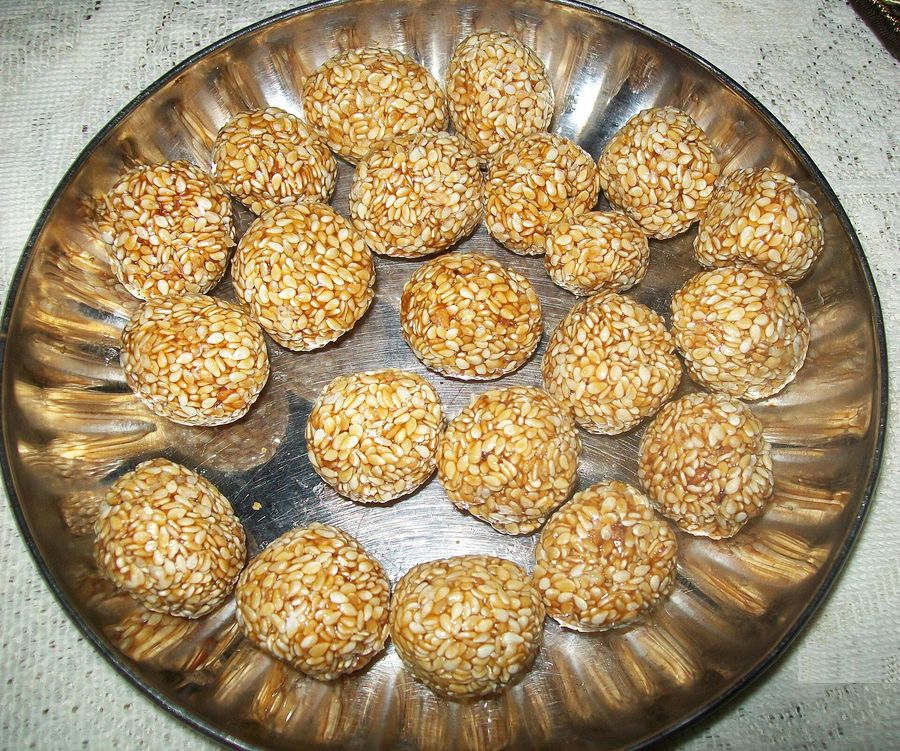
The fast itself is sunrise to sunrise. Drik's own pages list four grades of it: jalahar, water only; ksheerbhoji, milk and milk products; phalahari, fruit only; and naktabhoji, a single grain-free meal before sunset. Most households keep the fruit-and-milk version, with sabudana, singhara and potatoes, and no grain, no beans, no onion or garlic. On Shattila the food that matters is sesame: til ladoo, made of sesame and jaggery, is the prasad of the day, and the photograph below is a plate of them — the sweet that is also the offering, and also the fast's own food.
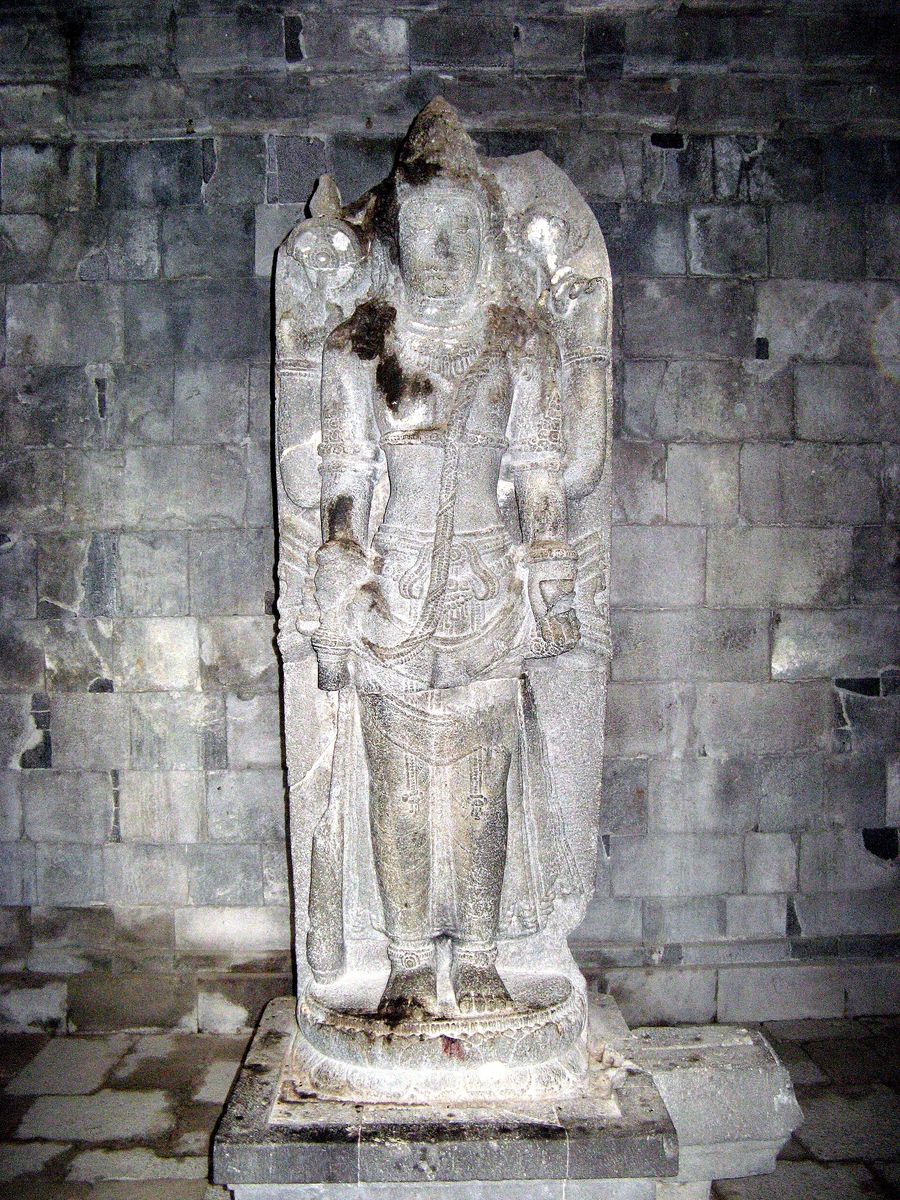
On the morning of the fast, bathe before sunrise in water mixed with sesame seeds, rub sesame paste on the body first, and take the sankalpa, the spoken resolve, before the image of Vishnu. The photograph below is the god of the day, a stone Vishnu at Candi Prambanan in Java — four-armed, standing in his own temple chamber, a reminder that this fast is kept well beyond India's borders.
The vidhi, as Pulastya tells it, has details worth knowing before the morning. Make a hundred and eight small balls from cow dung, sesame and cotton wool, and offer them into the sacred fire while chanting the holy names — the Purusha sukta among them — or skip that part if it is not possible where you live; the telling says so itself. Offer the Lord pumpkin, coconut and guava, or betel nut if those are unavailable. Stay awake through the night in Krishna's names — jagaran — and on the next morning worship Vishnu again and give a worthy brahmin a pot of water, an umbrella, a pair of shoes and clothes, and a pot full of sesame seeds, and a dark cow if you can afford one. Abroad, the umbrella and the shoes translate easily into warm clothing and food for someone who needs them; the telling's point is the giving, not the inventory.
Through the day, the katha is read or heard. The next morning, break the fast inside your city's Parana window, after feeding someone first and giving dana. That order matters: feed, give, then eat. The ladoo on the plate below is what the fast eats — sesame and jaggery, the two things January is made of.
Shattila Ekadashi 2027 in India
The fast is Tuesday, 2 February. The Ekadashi tithi runs 8:41 AM on Monday 1 February to 11:10 AM on Tuesday 2 February, and Parana is Wednesday 3 February, 7:08 to 9:19 AM. Delhi's sunrise on the 2nd is 7:09 AM and sunset 6:01 PM, and the Brahma Muhurta runs 5:24 to 6:16 AM. Dwadashi ends at 1:50 PM on Wednesday. The nakshatra on the fast day is Jyeshtha until 9:21 AM, then Mula.
Where India goes on this day
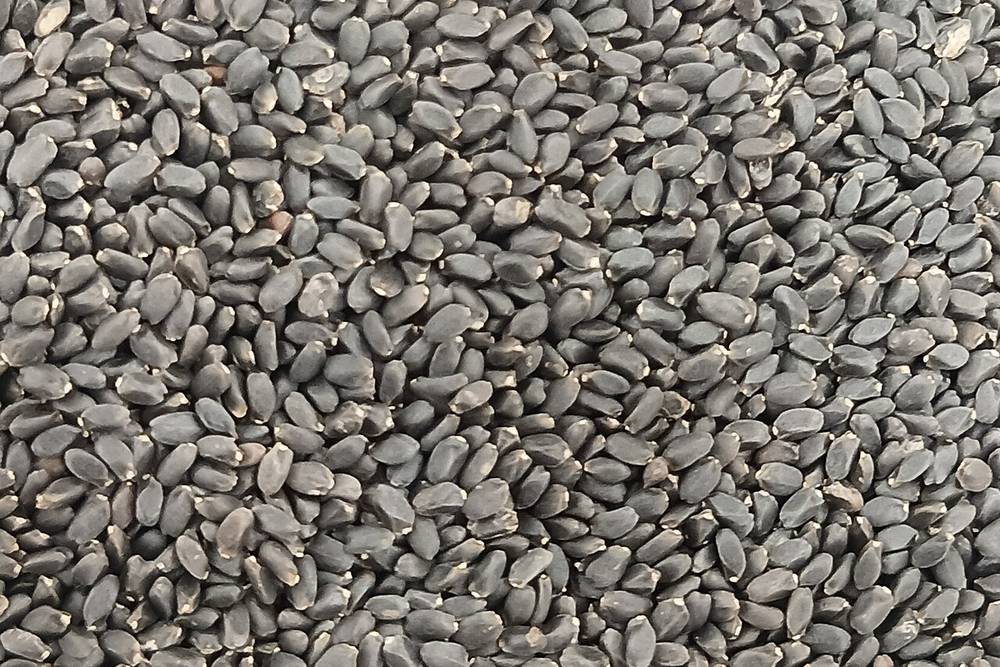
The photograph at the top of this page is black sesame seeds, close up — the whole festival in one frame, and the right picture for a fast whose god is Vishnu but whose subject is a seed. Most of India keeps this one at home: it is a Tuesday in the coldest part of the year, the house is still in winter mood, and the fast needs a bath, a lamp, a handful of sesame and a gift. If you are near a Vishnu temple, go in the morning — the fast begins at sunrise, and the sesame bath is best done while the house is still quiet.
And one practical note: Dashami is Monday 1 February, so the preparation day is a Monday too. Buy the sesame on Sunday. The black sesame for the bath, the white for the ladoo, the jaggery, the sabudana — all of it is easier bought before the working week starts. Other published sources give the Delhi tithi a minute or two differently — 8:43 to 11:12 in one, 8:42 to 11:11 in two others — against Drik's 8:41 to 11:10. This page follows Drik, and the difference changes nothing about the fast day.
Shattila Ekadashi 2027 in USA
The fast is Monday, 1 February — a day earlier than India. The tithi runs 10:11 PM on Sunday 31 January to 12:40 AM on Tuesday 2 February. New York's sunrise on Monday is 7:06 AM and sunset 5:13 PM, and the Brahma Muhurta is 5:15 to 6:11 AM.
A Monday fast, and a Tuesday-morning Parana
The Parana is Tuesday 2 February, 7:20 to 9:07 AM, with Hari Vasara ending at 7:20 AM — the window opens exactly at the Hari Vasara end, and the sunrise on Tuesday is 7:05 AM. So the fast runs from Monday sunrise to Tuesday morning, and the whole thing fits inside a normal working week: Dashami on Sunday 31 January, the fast on Monday, the Parana on Tuesday morning before work.
One thing to get right: do not use Delhi's Wednesday Parana for the New York fast. Delhi fasts a day later and breaks a day later; New York fasts on Monday and breaks on Tuesday. The two cities are keeping the same Ekadashi on different days, and each city's Parana belongs to its own fast.
The practical shape that works: Sunday is the preparation day, and it is a Sunday, which helps — the shopping, the sesame, the ladoo made in the afternoon, the katha read in the evening. A video call home on Monday evening reaches India on Tuesday morning, when Delhi families are just beginning the same fast. Both ends of the call are keeping Shattila; they are just a day apart on the calendar, and neither side is wrong.
Shattila Ekadashi 2027 in UK
The fast is Monday, 1 February — the same day as New York — with a separate Vaishnava fast on Tuesday, 2 February. The tithi runs 3:11 AM on Monday 1 February to 5:40 AM on Tuesday 2 February, and London's sunrise on Monday is 7:39 AM and sunset 4:50 PM — nine hours and eleven minutes of daylight — and the Brahma Muhurta runs 5:40 to 6:40 AM.
The afternoon Parana — read this before Tuesday
This is the part that will catch London out. The main fast breaks on Tuesday 2 February, 1:10 to 3:01 PM, not in the morning, because Hari Vasara ends at 12:20 PM. The Parana window opens fifty minutes after that. Do not break the fast on Tuesday morning: it would fall inside Hari Vasara, and Drik is explicit that the fast must not be broken then.
The Vaishnava fast breaks the normal way, on Wednesday 3 February, 7:36 to 8:20 AM — a forty-four-minute window that closes exactly when Dwadashi ends at 8:20 AM. Set an alarm for that one. It is the narrowest Parana in this series.
So a Smarta household in London fasts from Monday sunrise, breaks the fast on Tuesday afternoon, and is done. A Vaishnava household — and most ISKCON temples in Britain follow the Vaishnava calendar, so check your temple's announcement — fasts from Tuesday sunrise and breaks it on Wednesday morning. Both are right. They are different fasts, and the mistake is assuming your neighbour's Parana is yours.
One small thing worth noting: the Parana window on Tuesday opens at 1:10 PM, which is after lunch, not before it. Plan the day around it — the fast runs past midday, and the meal that breaks it is a late lunch, after feeding someone first and giving dana.
Shattila Ekadashi 2027 in Germany
The fast is Monday, 1 February, the same day as London and New York, with a separate Vaishnava fast on Tuesday, 2 February. The tithi runs 4:11 AM on Monday 1 February to 6:40 AM on Tuesday 2 February, and Parana for the main fast is Tuesday 2 February, 1:20 to 3:04 PM. Berlin's sunrise on Monday is 7:49 AM and sunset 4:52 PM — nine hours and three minutes of daylight — and the Brahma Muhurta runs 5:49 to 6:49 AM.
The same afternoon Parana, and the same split
Berlin's main Parana is in the afternoon for the same reason as London's: Hari Vasara ends at 1:20 PM on Tuesday, and the window opens exactly at that minute. Do not break the fast on Tuesday morning. The Vaishnava Parana is Wednesday 3 February, 7:45 to 9:20 AM, closing exactly when Dwadashi ends at 9:20 AM.
One practical note, the same one from the Dhanurmasam article: Germany has Ruhezeiten, and a 6 AM alarm and a running tap are still working hours for the neighbours. The home puja is quiet by nature — a bath, a lamp, a small bowl of sesame — which is one more reason this fast travels better than the noisy ones. If your temple stages a reading of the katha, it will be a temple affair, indoors, and the neighbours will never know.
And the sesame itself is easy to find in Germany: black sesame in an Asian grocery, white sesame in any supermarket, jaggery in an Indian shop or online. The ladoo needs nothing you cannot buy in Berlin on a Sunday.
Shattila Ekadashi 2027 in Mexico
The fast is Monday, 1 February — a day earlier than India — and Mexico City is the simpler of the two American cases: Drik lists a single entry here, no separate Vaishnava date, unlike London and Berlin.
The tithi runs 9:11 PM on Sunday 31 January to 11:40 PM on Monday 1 February. Mexico City's sunrise on Monday is 7:11 AM and sunset 6:29 PM, and the Brahma Muhurta is 5:29 to 6:20 AM.
The longest light of the six cities
Mexico City gets the most generous February day of the six: sunrise 7:11 AM, sunset 6:29 PM, eleven hours and eighteen minutes of light. The Parana is Tuesday 2 February, 7:11 to 9:27 AM — and it opens exactly at sunrise, 7:11 AM. Dwadashi ends at 2:20 AM on Wednesday, so the window is a comfortable morning one. And because the fast is on a Monday, the whole thing fits around the weekend: Dashami on Sunday 31 January, the fast on Monday, the Parana on Tuesday morning.
The Indian community in Mexico is small, and this is mostly a home observance there — which is fine, because a home observance is what this fast mostly is, even in the katha, once you step outside the temple courtyard. The fast needs a bath, a lamp, a handful of sesame and a gift. Everything else is commentary. And the sesame is easy to find: ajonjolí in any Mexican market, black and white both, and piloncillo stands in for jaggery in the ladoo without anyone noticing the difference.
Shattila Ekadashi 2027 in Russia
The fast is Tuesday, 2 February, the same day as India. The tithi runs 6:11 AM on Monday 1 February to 8:40 AM on Tuesday 2 February, and Parana is Wednesday 3 February, 8:20 to 10:06 AM. Moscow's sunrise on Tuesday is 8:22 AM and sunset 5:05 PM — eight hours and forty-three minutes of daylight, the shortest day in this article — and the Brahma Muhurta runs 6:20 to 7:21 AM. Dwadashi ends at 11:20 AM on Wednesday.
A fast staged in the dark
Moscow's Brahma Muhurta ends more than an hour before the sun is up, and the sun, when it comes, is up for less than nine hours. The bath before sunrise happens in full dark, which is the traditional form anyway: the bath at dawn, in darkness, is how the old guides describe the start of a fast day. A Moscow February simply makes the description literal — and on this fast the bath is the ritual itself, sesame in the water, so the darkness is part of it, not an obstacle to it.
One small detail from Drik's own numbers: the Parana window opens at 8:20 AM on Wednesday, exactly at sunrise. Break the fast inside the window, after feeding someone first and giving dana, and do not rush it for the sake of a minute.
The evening puja is the same as everywhere else, and the time zones offer their usual small mercy: a video call home after the evening lamp reaches India at around 8:30 PM IST, when Delhi families are sitting down to their own evening after a day that began four hours earlier. Both ends of the call are keeping Shattila on the same Tuesday — Moscow and Delhi agree on this one.
East of Moscow the timings shift with the time zones, as always. Your local temple or your own city's panchang is the authority there; Moscow's hours belong to Moscow.
What you'll need, roughly
Black sesame seeds for the bath, the body paste and the fire; white sesame seeds for the ladoo and the giving; jaggery for the ladoo. A picture or idol of Vishnu — with Lakshmi, if your family keeps them together — flowers, tulsi, a lamp and oil. Fruit and milk for the fast, and sabudana, singhara and potatoes, and nothing with grain in it. A copy of the katha to read or hear, and the story of the woman and the lump of clay to tell the children, because it is the one about a house that was full and empty at the same time. Rice and jaggery for the Parana meal, and something to give away first: sesame, food for someone who needs it, warm clothing, and dana for the temple or a brahmana.
That is the entire list. Shattila is not a festival of shopping. It is a fast, a story, and a handful of sesame — and a day kept in the coldest part of the year, when a small warm gift is worth more than a large cold one.
The Kartik–Margashirsha 2026 series: Diwali 2026 · Govardhan Puja 2026 · Bhai Dooj 2026 · Chhath Puja 2026 · Dev Uthani Ekadashi 2026 · Tulsi Vivah 2026 · Dev Diwali 2026 · Kalabhairav Jayanti 2026 · Utpanna Ekadashi 2026 · Margashirsha Amavasya 2026 · Vivah Panchami 2026 · Subrahmanya Shashthi 2026 · Dhanurmasam 2026 · Mokshada Ekadashi 2026 · Margashirsha Purnima 2026 · Akhuratha Sankashti Chaturthi 2026 · Sabarimala Mandala Pooja 2026 · Saphala Ekadashi 2027 · Magh Mela 2027 · Lohri 2027 · Makar Sankranti 2027 · Pongal 2027 · Makaravilakku 2027 · Pausha Amavasya 2027 · Pausha Putrada Ekadashi 2027 · Shakambhari Purnima 2027 · Pausha Purnima 2027 · Thiruvathira 2026 · Shattila Ekadashi 2027
Check your own city before you rely on any date here: the Hindu Panchang Calculator shows today’s tithi and festival dates for your location, the Hindu Date Converter converts between Gregorian and Hindu calendar dates, and this article on the astronomy behind the panchang explains how these calculations are actually made.
Photos: Black sesame seeds — Ranjithkumar Murugesan, CC0; sesame plant in flower — Ramesh Kunnappully, CC BY-SA 4.0; til ladoo — Vidya pmysore, CC BY-SA 4.0; Vishnu statue, Candi Prambanan — Michael Gunther, CC BY-SA 4.0; all via Wikimedia Commons.
Timings follow Drik Panchang's city pages for New Delhi, New York, London, Berlin, Mexico City and Moscow, checked 23 November 2026 — festival pages for the tithi and Parana, day-panchang pages for 1, 2 and 3 February for sunrise, sunset and Brahma Muhurta. Where Drik gives no separate Hari Vasara line (Delhi, Mexico City, Moscow), this page quotes the Dwadashi end moment instead and says so. The six uses of sesame and the katha follow the Padma Purana telling as retold in the Bhavishya Uttara Purana tradition; the two tellings differ on the sixth use, and this page names that. Other sources give the Delhi tithi a minute or two differently (8:41–11:10 on Drik; 8:43–11:12 in one source); this page follows Drik. Your local temple's announcement overrides any website, including this one.