
Mandala Pooja 2026 is Sunday, 27 December — the 41 days end at Sabarimala
Mandala Pooja 2026 is Sunday, 27 December at Sabarimala, ending the 41-day Mandala vratham that began 17 November. Dates, temple timings, the irumudi and the 18 steps — in India and abroad.
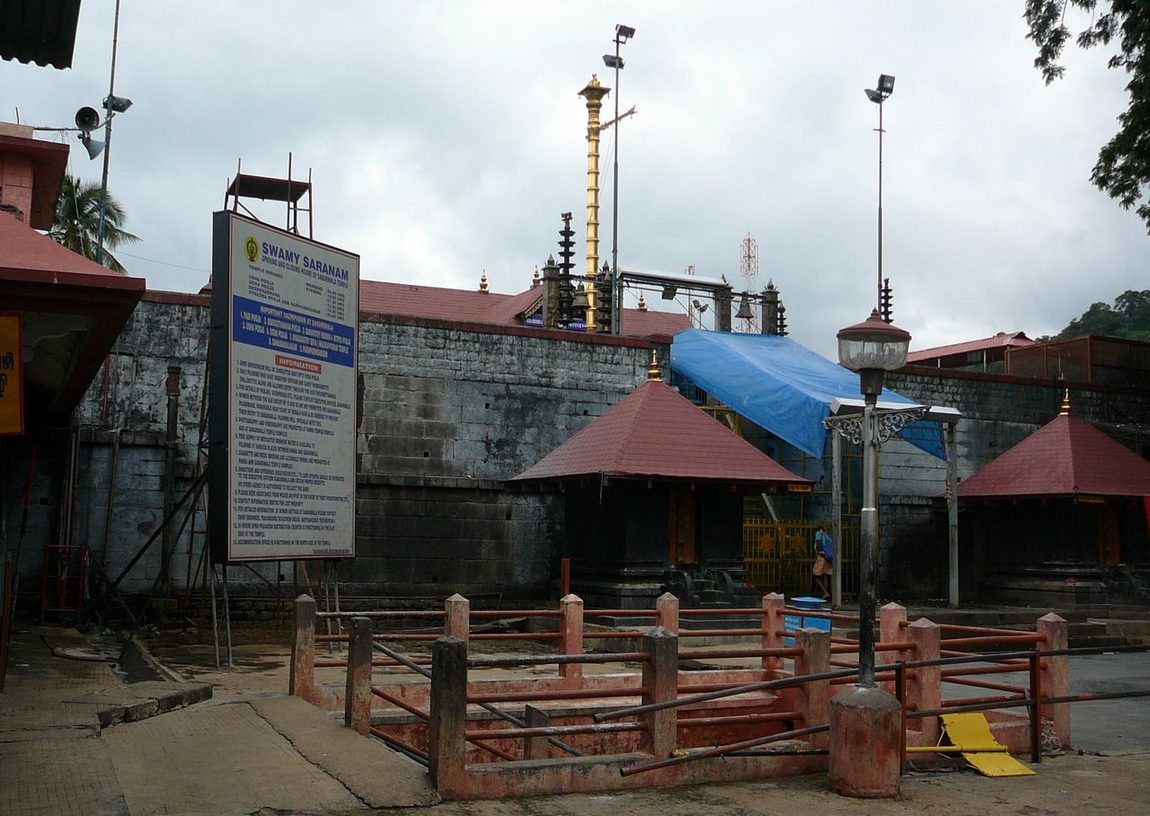
Mandala Pooja 2026 falls on Sunday, 27 December, at the Sabarimala temple in Kerala. It is the day the 41-day Mandala vratham ends — the fast that began on Tuesday, 17 November, when the temple opened for the season — and the temple closes that same night, reopening on 30 December for the Makaravilakku phase. If you kept the vratham, this is the day it was all for. If you didn't, it is still the day to watch for: the hill will be at its fullest, and the evening's pooja is the main festival of the temple's year.
There is no muhurat window to give you here, and I won't invent one. Mandala Pooja is set by the temple's calendar, not by a tithi, and Drik Panchang lists no timing for it in any city. What the temple does publish is the shape of the day: the morning's neyyabhishekam, the pooja itself — when the golden Thanka Anki is placed on the idol — and the closing of the temple that night. The rest of this page is the season around that day, city by city, and what the forty-one days actually ask of the people keeping them.
Mandala Pooja 2026 at a glance
| Mandala Pooja | Sunday, 27 December 2026, Sabarimala Sree Dharma Sastha Temple, Kerala |
| The season | Temple opened evening of Mon 16 Nov; rituals from Tue 17 Nov, 3 AM (Vrischikam 1) |
| The 41 days | Tue 17 Nov – Sun 27 Dec inclusive: 14 days of November + 27 of December |
| Temple closes | Night of Sun 27 Dec (closing scheduled ~10:00 PM) |
| Temple reopens | Wed 30 Dec, 5 PM, for the Makaravilakku phase |
| Makaravilakku | Thu 14 Jan 2027 on the temple's calendar (see the wrinkle below) |
| Season ends | Tue 20 Jan 2027 |
| Daily pilgrim cap | 80,000 (Travancore Devaswom Board, 2026–27 season); Virtual-Q booking mandatory |
| Delhi, 27 Dec | Sunrise 7:12 AM, sunset 5:32 PM; Brahma Muhurta 5:23–6:18 AM |
| New York, 27 Dec | Sunrise 7:19 AM, sunset 4:35 PM; Brahma Muhurta 5:21–6:20 AM |
| London, 27 Dec | Sunrise 8:06 AM, sunset 3:57 PM; Brahma Muhurta 5:57–7:01 AM |
| Berlin, 27 Dec | Sunrise 8:17 AM, sunset 3:58 PM; Brahma Muhurta 6:06–7:12 AM |
| Mexico City, 27 Dec | Sunrise 7:09 AM, sunset 6:07 PM; Brahma Muhurta 5:24–6:16 AM |
| Moscow, 27 Dec | Sunrise 8:59 AM, sunset 4:02 PM; Brahma Muhurta 6:44–7:52 AM |
| The day's work | Morning neyyabhishekam, the Mandala Pooja with the Thanka Anki, deeparadhana |
One wrinkle first, because it will confuse people who check with their own temple — and it is better to say it here than have them find it on the day. Some temples abroad hold their culminating pooja on Saturday, 26 December, not the 27th. They are not wrong. The Sri Guruvayurappan Temple of Dallas, for example, publishes its 2026 Mandalam as starting on 16 November, and counts its 41st day as 26 December. The Vrischikam Sankranti itself falls on Monday 16 November on the local calendar in London, New York and New Jersey, so temples there that began on the 16th finish a day earlier than Sabarimala. The Kerala date governs Sabarimala; your temple's date governs your local observance. If your temple says the 26th, go on the 26th.
A second wrinkle, about what comes next. The temple's calendar puts Makaravilakku on Thursday, 14 January 2027. Drik's own Makara Sankranti listing puts the Sun's entry into Makara a day later, on Friday 15 January. The temple observes the 14th; the computed sankranti is the 15th. This page follows the temple for the festival, and the Makaravilakku article in this series will re-verify the date directly before it is published. There is no link to it yet, because the article does not exist yet.
What the 41 days actually are
The vratham begins with the mala. A devotee takes a bead mala — tulasi or rudraksha, usually with a small locket of Ayyappa — from a guru swami or a temple priest, in a short ceremony called malayidal. Saturday is the favoured day for it, or Uthram, Ayyappa's birth star. From that moment the devotee is called Ayyappan, and stays Ayyappan until the mala comes off after the pilgrimage.
The forty-one days after that are not complicated to describe and are hard to keep. Kerala Tourism's own account of the vratham lists them plainly: celibacy and a vegetarian diet for the whole period, no smoking and no alcohol, black clothes — black because it stands for detachment from material things, though blue and saffron are accepted in many groups — no haircut, no shaving, no nail-cutting, barefoot, a bath before the morning prayer and again before the evening one, sandal paste or vibhuti on the forehead. The idea, as the temple's rituals page puts it, is to build discipline and healthy practices into a habit over sustained effort. It is a vow, not a diet plan, and the families who keep it will tell you the first week is the hardest and the last week is the one that matters.
A few groups abroad count 42 days rather than 41 — the Bay Area's Ayyappa Samaaj does — because they start a day earlier. The 41-day count is the temple's and the overwhelmingly common one. Your guru swami's count is the one that governs you, not a website's.
The irumudi, and the eighteen steps
Before anyone sets out for the hill, the irumudi is packed, in a ceremony called kettunirakkal, led by the guru swami. It is a two-part cloth bundle carried on the head. The front part, the munmudi, holds the offerings for the Lord — above all a coconut emptied of its water and filled with ghee, the nei thenga. The back part, the pinmudi, holds the pilgrim's own provisions for the journey. The ghee is the point of the whole bundle: it is poured over Ayyappa in the neyyabhishekam, the ghee abhishekam, which is the offering the entire forty-one days have been carrying up the hill.
The rule that matters most is the one Kerala Tourism states without softening: no devotee without an irumudi kettu may climb the eighteen holy steps, the Pathinettam Padi, to the shrine. The steps are gold-covered, and climbing them barefoot with the bundle on your head is the emotional centre of the pilgrimage — the moment the vow turns into darshan. Only the royal family of Pandalam is excepted from the rule.
At the base of the hill, before the climb, there is the dip in the Pamba river and the prayer at the Pamba Ganapathy temple. The climb itself is about four kilometres from Pamba to the Sannidhanam, through forest inside the Periyar Tiger Reserve. On Mandala Pooja day the hill is at its most crowded, and the board caps entry at 80,000 devotees a day for this season — booked in advance through the Virtual-Q system, which the board says is mandatory. If you are going, book first and travel second.
The day itself at Sabarimala
The day begins before dawn, as every day of the season does, with the neyyabhishekam — the ghee the pilgrims have carried up in their coconuts, poured over the Lord. In past years the morning's neyyabhishekam has been completed by around ten, and then the Mandala kala pooja begins: the tantri fills the kalasam with kalabham, the sandal paste, and the pooja runs through the day to the evening's deeparadhana and pushpabhishekam. That is the shape as it has run in past years; the board has not published an hour-by-hour programme for 2026, so take the shape, not the hours.
The detail that makes the day what it is belongs to Kerala Tourism's rituals page. The Thanka Anki — the golden attire weighing 420 sovereigns, gifted by the Maharaja of Travancore, Chithira Tirunal Bala Rama Varma, in 1973 — is placed on the idol during the Mandala pooja, which the page calls "the main festival of the temple, at the end of the 41-day fast". The gold ornaments, the Thiruvabharana, are a different day's honour: they go on the idol for Makaravilakku, in January. On 27 December it is the Thanka Anki, and then the temple closes for three days.
One thing to say plainly, because readers will ask. By long temple custom, women between the ages of 10 and 50 do not make the climb to Sabarimala. The restriction has been before the courts, and as of October 2026 no judgment on it had been delivered. The custom stands for this season. Check the temple's own notices before travelling, as with everything else on this page.
Mandala Pooja 2026 in India
The observance is Sunday, 27 December — at the temple, and in the homes of everyone who kept the vratham. Delhi's sunrise that day is 7:12 AM and sunset 5:32 PM, and the Brahma Muhurta runs 5:23 to 6:18 AM. The tithi is Pausha Krishna Chaturthi until 5:12 PM, then Panchami, and the nakshatra turns from Ashlesha to Magha around midday — none of which sets the date, which is the temple's, but all of which is what your panchang will show if you look.
Where India goes on the day
Sabarimala itself, obviously, for those who kept the vratham and hold a Virtual-Q slot. For everyone else the day is kept at home or at the local Ayyappa temple: the mala comes off only after the pilgrimage is done and a coconut is broken in offering, so a devotee who is not travelling keeps the discipline through the day and completes it at their own temple. The evening is the time to watch for — the deeparadhana at the Sannidhanam, and the news of the temple closing for the three-day break before the Makaravilakku phase opens on the 30th.
If you are in Kerala and near the hill, the practical advice is the board's, not mine: book the Virtual-Q slot before anything else, carry the irumudi, and expect the hill to be full. The season's own numbers say the crowds are the story of this year as much as the pooja.
Mandala Pooja 2026 in USA
The observance is Sunday, 27 December at Sabarimala — but read the wrinkle at the top of this page before you put it in your diary, because your temple may say Saturday the 26th. The Vrischikam Sankranti falls on Monday 16 November on the New York calendar, and the US temples that publish dates begin their Mandalam on the 16th. Dallas counts its 41st day as 26 December and holds its Mahamandala Pooja that morning, starting at 5:30 AM with Ganapathi Homam, kettunira, abhishekam and kalasha poojas. New York's sunrise on the 27th is 7:19 AM and sunset 4:35 PM, and the Brahma Muhurta runs 5:21 to 6:20 AM.
Where America gathers
The United States has the strongest Ayyappa network outside India, and it is built around the same two things as the hill: the eighteen steps and the weekly bhajan. The Sri Siva Vishnu Temple in Lanham, Maryland, calls itself the Sabarimala of the West — it has a sanctified set of eighteen holy steps, and its Padi Puja is performed on the first day of the Mandalam season. The Sri Ayyappa Temple of Tampa, Florida, was the first dedicated Ayyappa temple in the country, has the full eighteen steps, and keeps the whole Mandala Pooja season from November to January. The Westchester Ayyappa Swami Temple in White Plains, New York, is the only standalone Ayyappa temple in the Northeast. Dallas has North Texas's first holy eighteen steps at the Sri Guruvayurappan Temple. Chicago's Ayyappa Seva Sangham and Atlanta's Sastha Atlanta Sabha run the season's padi pujas, kettunira and mala dharanam for their cities, and the Bay Area's Ayyappa Samaaj holds its Mandala Puja Mahotsavam at the SVCC temple in Fremont.
The shape of the season abroad is the weekly rhythm, not the single day. Saturday bhajans, padi pooja, the mala taken in mid-November, the kettunira in December, and then the Mahamandala Pooja — on the 26th or the 27th, as your temple counts it. Most American devotees complete the whole vow without ever going to Kerala, and the temples are built for exactly that. If you kept the vratham in the States, your temple is where it ends. And if you are flying to Kerala instead, the same rule as at home applies: the Virtual-Q booking comes first.
Mandala Pooja 2026 in UK
The observance is Sunday, 27 December at Sabarimala, and the same one-day wrinkle applies: the sankranti falls on Monday 16 November on the London calendar, so a temple that began its Mandalam on the 16th will close it on the 26th. London's sunrise on the 27th is 8:06 AM and sunset 3:57 PM — seven hours and fifty-one minutes of daylight — and the Brahma Muhurta runs 5:57 to 7:01 AM.
Harrow, and the miniature steps
Britain's Ayyappa centre is the Sree Ayyappan Temple in Harrow, north-west London, which describes itself as the first Ayyappan temple in the UK and has a miniature set of eighteen steps. It is the place London's devotees take the mala, keep the weekly bhajans through the season, and do the kettunira. The pattern is the same as in America — the vow is kept at home, in black, barefoot indoors where the house allows it, and completed at the temple — only the scale is smaller and the December is darker.
The London version of the vratham has one practical difference worth naming. A 5:57 AM Brahma Muhurta in late December means the bath and the lamp happen in full dark, more than two hours before the sun is up, and the evening puja happens in the middle of the afternoon. That is the honest shape of keeping a Kerala vow in a London winter. The vratham was built for a tropical dawn; it survives the translation because the rules are about restraint, not about the weather.
Mandala Pooja 2026 in Germany
The observance is Sunday, 27 December at Sabarimala. Berlin's sunrise that day is 8:17 AM and sunset 3:58 PM — seven hours and forty minutes of daylight — and the Brahma Muhurta runs 6:06 to 7:12 AM.
No Ayyappa temple — and saying so matters
No dedicated Ayyappa temple was found in Germany, and this page will not invent one. Berlin has the Sri Mayurapathy Murugan Temple, founded in 1991 by Sri Lankan Tamils, and the Sri Ganesha Tempel in Neukölln, consecrated in June 2026 — but neither publishes an Ayyappa Mandala programme. So in Germany the vratham is, for most devotees, a home observance: the mala taken at home or at a Tamil temple, the black clothes, the simple food, the morning and evening prayer, and the company of other devotees rather than a temple programme.
That is not a lesser version of the season. The vratham's own rules are mostly about how you live at home — what you eat, what you wear, how you spend your mornings — and a flat in Berlin can hold all of that. What it cannot hold is the eighteen steps, and that is the part German devotees either do without or save for a trip to Kerala. If your local Tamil temple does stage a Mandala gathering, go; if it doesn't, the vow is still complete when the forty-one days are done. One practical note, the same one from the Dhanurmasam 2026 article: Germany has Ruhezeiten, and a 6 AM alarm and a running tap are still working hours for the neighbours. The home puja is quiet by nature — a lamp, a name, a small offering — which is one more reason this vratham travels better than the noisy festivals.
Mandala Pooja 2026 in Mexico
The observance is Sunday, 27 December at Sabarimala. Mexico City's sunrise that day is 7:09 AM and sunset 6:07 PM — ten hours and fifty-eight minutes of light, the most generous December day of the six cities — and the Brahma Muhurta runs 5:24 to 6:16 AM.
The longest light, and the smallest community
No Ayyappa temple was found in Mexico either, and the Indian community there is small, so this is almost entirely a home observance — which suits this vratham better than most. The rules are domestic: the mala, the black clothes, the vegetarian food, the bath before the morning prayer and again before the evening one. Mexico City gives you the one thing the European cities don't: a dawn bath in actual morning light, and an evening puja at a dusk that still feels like evening. The forty-one days are the same forty-one days. They just happen in better weather.
If you are keeping the vratham in Mexico, the useful link is not a temple but a screen: a video call home on the 27th reaches India on Sunday evening, after the pooja, when the temple has closed for its three-day break. Both ends of the call are keeping the same season, on the same day, and neither side is wrong about the date.
Mandala Pooja 2026 in Russia
The observance is Sunday, 27 December at Sabarimala. Moscow's sunrise that day is 8:59 AM and sunset 4:02 PM — seven hours and two minutes of daylight, the shortest day in this article — and the Brahma Muhurta runs 6:44 to 7:52 AM.
A vow kept in the dark
No Ayyappa temple was found in Russia, so this is a home observance too, and Moscow gives it the hardest version of the season's central demand. The Brahma Muhurta ends more than an hour before the sun comes up, so the bath and the lamp happen in full dark, and the sun, when it comes, is up for seven hours. The vratham's discipline — up early, bathed, at the altar while the stars are still out — is the traditional form anyway. A Moscow December simply makes the description literal.
The evening puja is the same as everywhere else, and the time zones offer their usual small mercy: a video call home after the evening puja reaches India at around 8:30 PM IST, when Delhi families are sitting down to their own evening after a day that began four hours earlier. Both ends of the call are keeping the same season on the same Sunday. East of Moscow the timings shift with the time zones, as always. Your local temple or your own city's panchang is the authority there; Moscow's hours belong to Moscow.
What you'll need, roughly
A mala, taken from a guru swami or a priest — tulasi or rudraksha, with an Ayyappa locket if your family keeps one. Black clothes, or blue or saffron if that is your group's custom. A picture or idol of Ayyappa, a lamp and oil, flowers, and sandal paste or vibhuti for the forehead. Simple vegetarian food for forty-one days, and the willingness to eat it without complaint. The irumudi, packed before the journey: the ghee coconut in front, your provisions behind, and a cloth bundle you can carry on your head.
That is the entire list, and it is deliberately short. The vratham is not a festival of shopping. It is a festival of restraint, and a vow kept for Ayyappa needs a mala, a lamp, and someone willing to live simply for forty-one days — and someone to climb the hill with at the end of it.
The Kartik–Margashirsha 2026 series: Diwali 2026 · Govardhan Puja 2026 · Bhai Dooj 2026 · Chhath Puja 2026 · Dev Uthani Ekadashi 2026 · Tulsi Vivah 2026 · Dev Diwali 2026 · Kalabhairav Jayanti 2026 · Utpanna Ekadashi 2026 · Margashirsha Amavasya 2026 · Vivah Panchami 2026 · Subrahmanya Shashthi 2026 · Dhanurmasam 2026 · Mokshada Ekadashi 2026 · Margashirsha Purnima 2026 · Akhuratha Sankashti Chaturthi 2026 · Sabarimala Mandala Pooja 2026
Check your own city before you rely on any date here: the Hindu Panchang Calculator shows today’s tithi and festival dates for your location, the Hindu Date Converter converts between Gregorian and Hindu calendar dates, and this article on the astronomy behind the panchang explains how these calculations are actually made.
Photos: Sannidhanam at Sabarimala — Sailesh, CC BY-SA 3.0; the 18 holy steps — Sailesh, CC BY-SA 3.0; Sabaripeedam — Sailesh, CC BY-SA 3.0; all via Wikimedia Commons.
Dates follow the Travancore Devaswom Board's 2026–27 season calendar as reported when the temple opened on 16–17 November 2026 (dakshin.news, reporterworldnews.com, southpolitics.com, urbanacres.in, klcottages.com). Sunrise, sunset and Brahma Muhurta times are from Drik Panchang's day panchang for 27 December 2026 for New Delhi, New York, London, Berlin, Mexico City and Moscow, checked 17 November 2026; Drik lists no Mandala Pooja muhurat, because the date is the temple's, not a tithi's. Vratham rules, the irumudi and the 18-steps rule, and the Thanka Anki follow Kerala Tourism and sabarimala.kerala.gov.in. The 26 December difference follows the Sri Guruvayurappan Temple of Dallas's published 2026 programme and HinduTone's Ayyappa Deeksha Abroad 2026–27 guide. Where sources disagree — the temple's 14 January Makaravilakku against Drik's 15 January Makara Sankranti, the opening hour on 16 November, the closing hour on 20 January — this page says so and says which source it follows and why. Your local temple's announcement overrides any website, including this one.