
Pausha Putrada Ekadashi 2027 is Monday 18 January everywhere — but Delhi and Moscow break the fast in the afternoon
Pausha Putrada Ekadashi 2027 is Monday, 18 January in India, USA, UK, Germany, Mexico and Russia. Parana is Tuesday afternoon in Delhi (1:35–3:42 PM) and Moscow — morning everywhere else. The Suketuman katha and how the fast is kept.
Pausha Putrada Ekadashi 2027 falls on Monday, 18 January in India, the United States, the United Kingdom, Germany, Mexico and Russia — the same day in all six cities, which is not something this series gets to say very often. The catch is the Parana. In Delhi and Moscow the fast is broken on Tuesday afternoon — Delhi 1:35 to 3:42 PM, Moscow 1:28 to 3:02 PM — because Hari Vasara runs past midday there. Everywhere else it is a normal Tuesday morning Parana. Get that one detail wrong and you break the fast inside Hari Vasara, which is the one thing the rules actually forbid.
That is the whole of it, and the rest of this page is the detail: the afternoon Parana, the Tuesday that some calendars insist on instead, the story of the king who had everything except a child, and what each city actually does.
Pausha Putrada Ekadashi 2027 at a glance
| Fast, all six cities | Monday, 18 January 2027 |
| Gauna / Vaishnava fast, Delhi & Moscow | Tuesday, 19 January 2027 |
| Ekadashi tithi, Delhi | 10:26 AM Mon 18 Jan – 7:49 AM Tue 19 Jan |
| Ekadashi tithi, New York | 11:56 PM Sun 17 Jan – 9:19 PM Mon 18 Jan |
| Ekadashi tithi, London | 4:56 AM Mon 18 Jan – 2:19 AM Tue 19 Jan |
| Ekadashi tithi, Berlin | 5:56 AM Mon 18 Jan – 3:19 AM Tue 19 Jan |
| Ekadashi tithi, Mexico City | 10:56 PM Sun 17 Jan – 8:19 PM Mon 18 Jan |
| Ekadashi tithi, Moscow | 7:56 AM Mon 18 Jan – 5:19 AM Tue 19 Jan |
| Parana, Delhi (Smarta) | Tue 19 Jan, 1:35 – 3:42 PM |
| Parana, Delhi (Gauna) | Wed 20 Jan, 7:14 – 9:21 AM |
| Parana, New York | Tue 19 Jan, 7:16 – 9:12 AM |
| Parana, London | Tue 19 Jan, 7:56 – 9:38 AM |
| Parana, Berlin | Tue 19 Jan, 8:32 – 9:47 AM |
| Parana, Mexico City | Tue 19 Jan, 7:13 – 9:27 AM |
| Parana, Moscow (Smarta) | Tue 19 Jan, 1:28 – 3:02 PM |
| Parana, Moscow (Vaishnava) | Wed 20 Jan, 8:44 – 10:18 AM |
| The month | Pausha, Shukla Paksha (waxing fortnight) — Margashirsha in the Amanta reckoning |
| The deity | Narayana (Vishnu) |
One wrinkle first, because it is the one that will catch people out. In Delhi and Moscow the Ekadashi tithi ends early on Tuesday morning — 7:49 AM in Delhi, 5:19 AM in Moscow — and a morning Parana looks obvious. It is not available. Hari Vasara, the first quarter of Dwadashi, during which the fast must not be broken, runs on until 1:02 PM in Delhi and 10:32 AM in Moscow, so Drik puts the Parana in the afternoon: Delhi 1:35 to 3:42 PM, Moscow 1:28 to 3:02 PM. A Delhi household that breaks its fast at 8 AM on Tuesday would be breaking it inside Hari Vasara. Wait for the afternoon.
A second wrinkle, and this one is a genuine disagreement, not a quirk. Several other published 2027 panchangs list the fast itself as Tuesday 19 January, following the sunrise rule: the tithi is still running at Tuesday's sunrise in Delhi, so the fast belongs to Tuesday. Drik's Smarta list puts the household fast on Monday 18 January instead, because Dwadashi holds no sunrise after this Ekadashi — it begins and ends between two sunrises — so a fast kept on Tuesday would have no Dwadashi morning to be broken in, and the Smarta Parana has to fall inside Dwadashi. This page follows Drik, which is the house source for this series. But if your family or your temple follows the sunrise-rule date, keep Tuesday 19 January and break the fast on Wednesday morning: Delhi 7:14 to 9:21 AM, Moscow 8:44 to 10:18 AM. Those are the Gauna and Vaishnava windows Drik itself lists, so either way you are following a real calendar, not a guess. Check your temple's announcement and then stop worrying about it.
A third wrinkle, smaller. Drik gives a Hari Vasara end line for Delhi, Berlin and Moscow, but none for New York, London or Mexico City. For those three this page quotes the Dwadashi end moment instead — 6:11 PM in New York, 11:11 PM in London, 5:11 PM in Mexico City, all on Tuesday 19 January — and does not invent a Hari Vasara time for them. Berlin's is worth a look: its Hari Vasara ends at 8:32 AM and its Parana window opens at 8:32 AM, exactly on the minute. Set an alarm for that one and do not start early.
And one more thing the day panchang notes: Tuesday 19 January is also Kurma Dwadashi in Delhi and Moscow, and Drik's 2027 list names Trisparsha Mahadwadashi on the same day. It is the day the fast breaks into, and it carries its own observances — but the Parana comes first.
What Putrada means, and why this one is kept
Putrada is putra — a son, a child — plus da, giver. The giver of a child. Of all the Ekadashis, this is the one couples keep when they are hoping for a child, and the one parents keep for the wellbeing of the children they already have. The old telling says son, plainly, because that is what a king without an heir prayed for in the story. Today most couples who keep it are praying for a child, full stop, and plenty of families keep it for a daughter's health or a son's exams with equal seriousness. The name has stayed. The prayer has widened.
Say this plainly too, because it matters more than the timings: a fast is not a fertility treatment. The katha promises a blessing, and this page reports that promise as the telling's own, not as a medical claim. Couples who have been trying for a long time should talk to a doctor as well as keeping the vrat. The two are not in competition, and nobody's faith should be used to sell them a delay.
It sits a fortnight after Saphala Ekadashi, which opened the year, and eleven days after Pausha Amavasya. The Magh season is in full swing around it — Lohri and Makar Sankranti have just passed, Magh Mela is running at Prayag, and Pausha Purnima follows on Friday 22 January. There are two Putrada Ekadashis in a year, not one: this is the Pausha one, and the Shravana Putrada Ekadashi comes on Thursday 12 August 2027. This page is about the January one.
The katha: the king who had everything except a child
The story is told as Krishna telling Yudhishthira, from the Bhavishya Uttara Purana, and it begins the way these stories usually begin — with a good king in trouble. His name was Suketuman, and he ruled the city of Bhadravati. His queen was Shaibya. They had wealth, elephants, horses, loyal relatives, a kingdom that loved them, and no child. That was the whole of their sorrow, and it filled the palace the way a leak fills a house: slowly, everywhere, impossible to ignore.
The telling is specific about what actually hurt. It was not only the empty nursery. It was the tarpana — the water offered to the forefathers — which they offered knowing there would be nobody to offer it for them when they died, and the knowledge, the story says, that their forefathers were worried about the same thing. A king without an heir, the telling says, cannot repay his debts to his ancestors, the devas and other human beings, and his house stays vacant no matter how splendid it is. Suketuman thought about it from morning to evening and then dreamed about it all night, until at last he could not bear the palace any more and rode out into the forest alone on his horse.
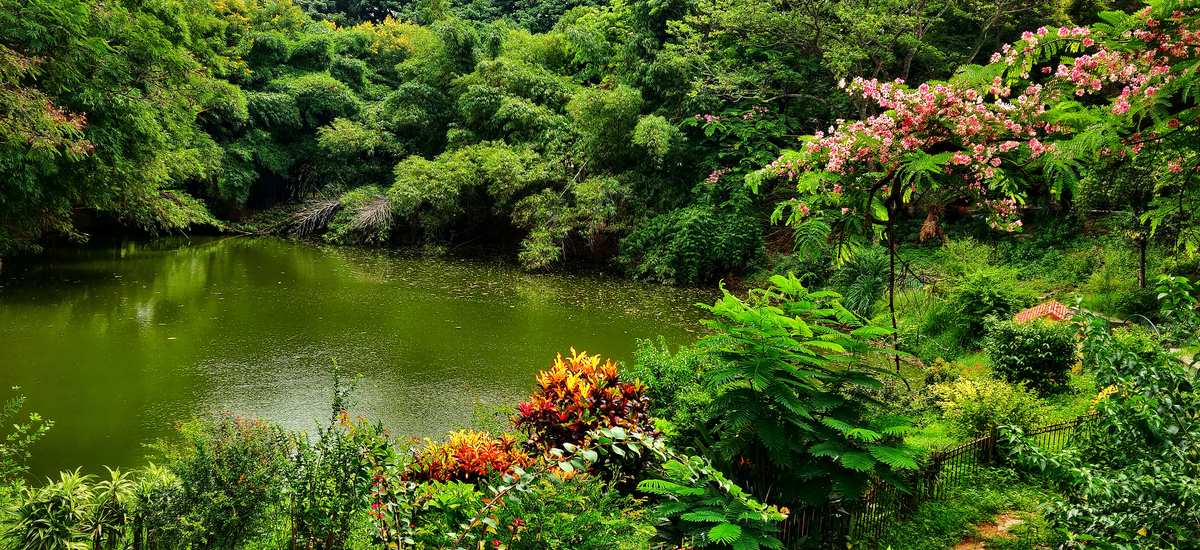
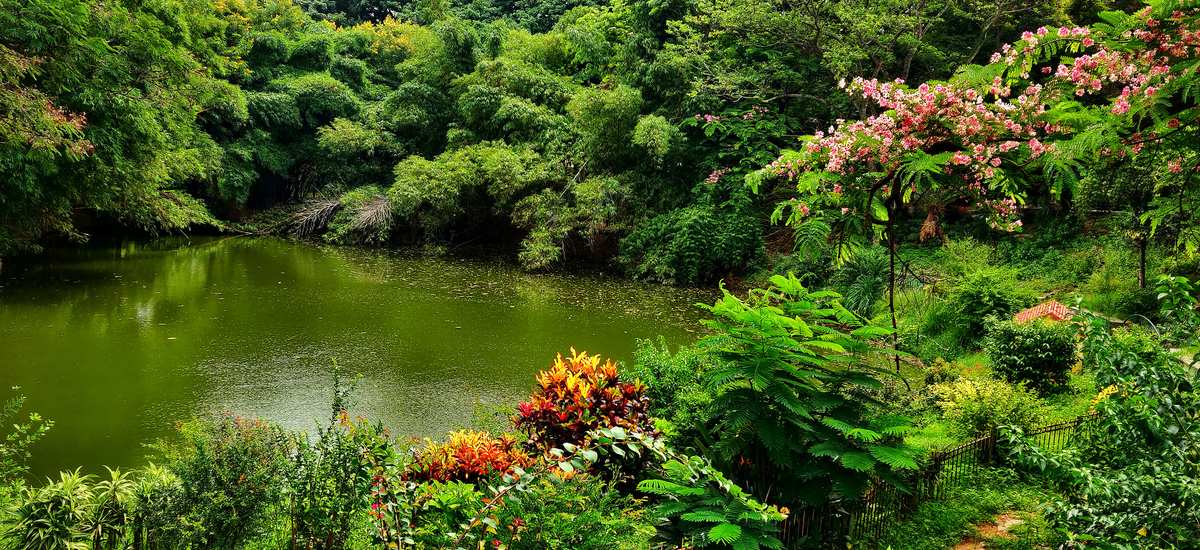
He rode through the forest the whole morning, past deer and tigers and peacocks dancing with their families, and every animal with its young deepened the ache. By midday he was hungry and thirsty and still riding, wondering what sin he could possibly have committed, when he came to a lake covered in lotus flowers, with the ashrams of sages along its shore. The photograph at the top of this page is that kind of lake — a lotus pond in a botanical garden in Bengaluru, green water and trees all around it, the sort of still place where a man on a horse would stop.
He dismounted, bowed to the sages, and sat humbly before them. They asked him what he wanted, and he asked who they were. Here the tellings disagree, and this page names it rather than picking one quietly: the ISKCON telling says they were the ten Vishvadevas — Vasu, Satya, Kratu, Daksha, Kala, Kama, Dhriti, Pururava, Madrava and Kuru — come to bathe in the lake, while another telling says they were the sons of Kashyapa Muni, dwelling there in austerity. Either way, they told him the same thing: today is Putrada Ekadashi, the month of Magha is five days away, and a man who desires a son should strictly observe this Ekadashi.
Suketuman asked for the boon directly — if you are pleased with me, grant me a good son — and they told him the name itself was the answer. Putrada means giver of a putra, a pious son. Keep the fast in full, they said, and by their blessing and the mercy of Lord Keshava you will surely obtain one. He stayed the night with the sages, kept the fast with devotion, broke it on Dwadashi and bowed to them all, and rode home.
And in time, the telling says, a beautiful son was born to the king and queen, and the palace rejoiced, and the prince grew into an able administrator who ruled the kingdom virtuously for a very long time. The telling adds two promises for those who hear it: that keeping the fast gives knowledge, wealth and fame, and that hearing the katha carries the merit of a great yajna — and this page reports them as the telling's promises, not as its own.
The point of the story is not really the son. It is the lake. A man who had done everything right — the yajnas, the feasts for brahmanas, the good rule — still had a sorrow no effort had fixed, and the answer came not from another effort but from stopping, sitting down by a lake, and asking strangers who happened to be holy men. That is a kinder thing to hear in January than most advice about wanting a child.
How the fast is kept
The shape is the same shape as Utpanna Ekadashi and Saphala Ekadashi, and anyone who kept those will recognise it. The day before, Dashami — Sunday 17 January in all six cities — take one simple sattvic meal and no food at night, and pluck the tulsi today, not on Ekadashi. On the morning of the fast, bathe before sunrise and take the sankalpa, the spoken resolve, before the image of Narayana.
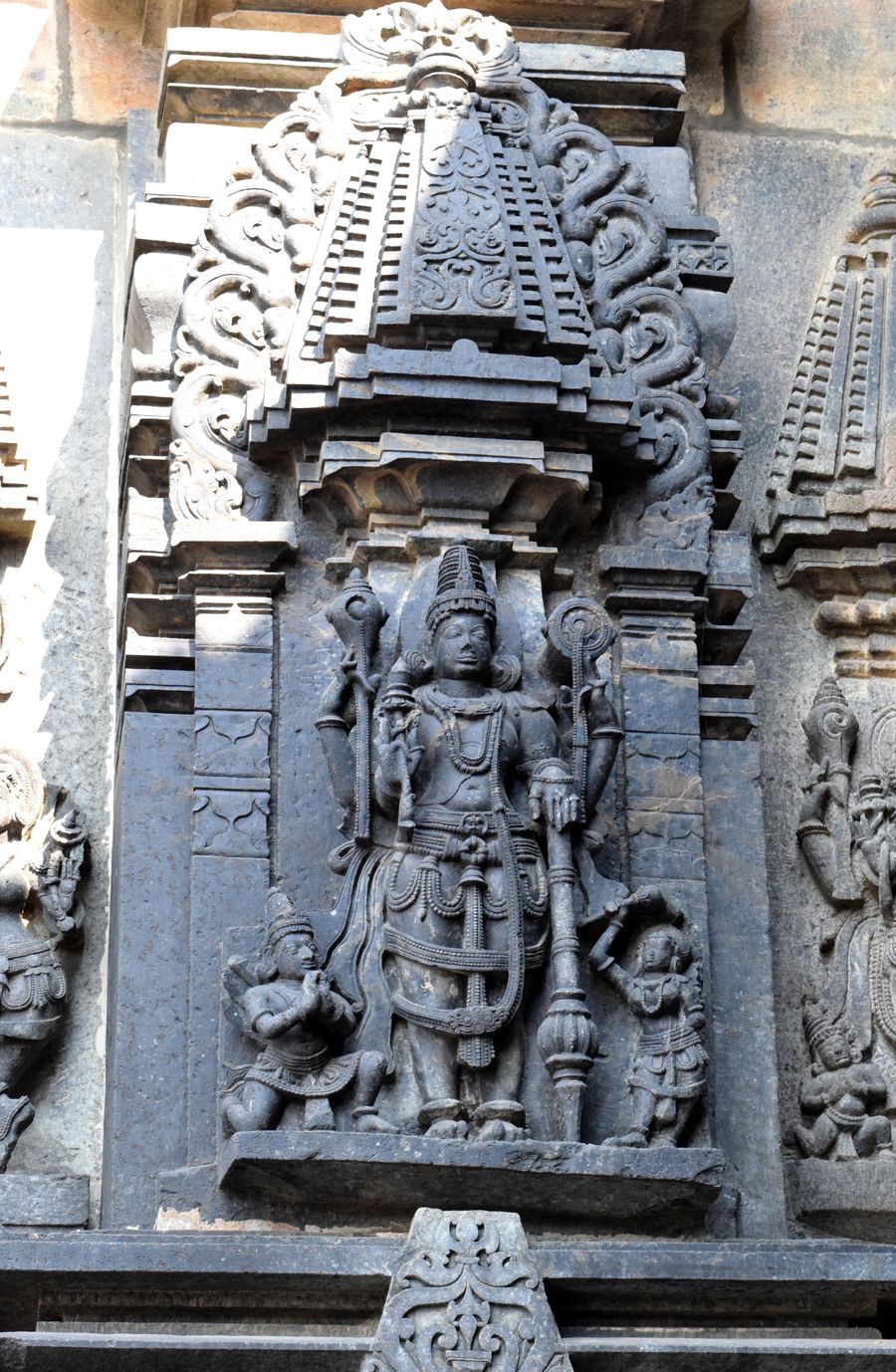
The fast itself is sunrise to sunrise. Drik's own pages list four grades of it: jalahar, water only; ksheerbhoji, milk and milk products; phalahari, fruit only; and naktabhoji, a single grain-free meal before sunset. Most households keep the fruit-and-milk version, with sabudana, singhara and potatoes, and no grain, no beans, no onion or garlic. The photograph below is the god of the day, Vishnu in relief on the Chennakeshava Temple at Belur, four-armed, with his attendants around him.
Through the day, the katha is read or heard — the story of Suketuman, ideally told to the children, because it is the one about a man who got the thing he had stopped believing he would get — and those who keep the full night stay awake in Vishnu's names. The next day, break the fast inside your city's Parana window, after feeding someone first and giving dana. That order matters: feed, give, then eat. And in Delhi and Moscow, remember the afternoon: the window opens at 1:35 PM and 1:28 PM respectively, and a morning Parana there is not a Parana at all.
One practical note for couples keeping this one together: the fast is a shared observance in the telling — Suketuman kept it, and the blessing came to the king and queen together. Keep it together if you can. The katha read aloud in the evening, the lamp lit, the two of you awake in it — that is the shape the story itself prescribes.
Pausha Putrada Ekadashi 2027 in India
The fast is Monday, 18 January. The Ekadashi tithi runs 10:26 AM on Monday 18 January to 7:49 AM on Tuesday 19 January, and the Smarta Parana is Tuesday 19 January, 1:35 to 3:42 PM, with Hari Vasara ending at 1:02 PM. Delhi's sunrise on the 18th is 7:15 AM and sunset 5:48 PM, and the Brahma Muhurta runs 5:27 to 6:20 AM. Dwadashi ends at 4:41 AM on Wednesday 20 January — before that morning's sunrise, which is why Drik notes, on the Gauna page, that Dwadashi would be over before sunrise on Parana day.
The second day, and who keeps it
Drik lists a second fast for Delhi: Gauna Pausha Putrada Ekadashi on Tuesday 19 January, with Parana on Wednesday 20 January, 7:14 to 9:21 AM. The 19 January day panchang also names Vaishnava Pausha Putrada Ekadashi, so both labels appear for Delhi on that Tuesday. Householders — Smarta families — fast on Monday and break it on Tuesday afternoon. Vaishnavas, and those who follow the Gauna calendar, fast on Tuesday and break it on Wednesday morning. Both are listed on Drik's own pages. They are different fasts, and the mistake is assuming your neighbour's Parana is yours.
And one practical note for the day itself: Dashami is Sunday 17 January, so the preparation day is a Sunday. Do the shopping on Saturday. The fruit for the offering, the sabudana, the milk — all of it is easier bought before the weekend starts, and the tulsi should be plucked on Sunday, not on Monday.
Pausha Putrada Ekadashi 2027 in USA
The fast is Monday, 18 January — the same day as India, and New York is the simpler of the two American cases this time: Drik lists a single entry here, no separate Gauna or Vaishnava date.
The tithi runs 11:56 PM on Sunday 17 January to 9:19 PM on Monday 18 January. New York's sunrise on Monday is 7:17 AM and sunset 4:57 PM, and the Brahma Muhurta is 5:22 to 6:19 AM. The Parana is Tuesday 19 January, 7:16 to 9:12 AM, opening exactly at sunrise — 7:16 AM — and Dwadashi ends at 6:11 PM on Tuesday.
A Monday fast, and a video call that works
Because the fast is on a Monday, most New York households will be keeping it around work: the bath and sankalpa before the commute, the katha in the evening, the fruit offering in the morning while the house is still quiet. The Parana on Tuesday morning is short and early, so set an alarm — the window opens at sunrise and closes at 9:12 AM, and a workday does not wait for it.
The time zones offer their usual small mercy here. A video call home on Monday evening reaches India on Tuesday morning, when Delhi families are still fasting — their Parana does not open until 1:35 PM IST — so both ends of the call are keeping Putrada on the same Monday, and the Delhi end can tell the New York end, with feeling, that the hard part is the waiting until the afternoon.
Pausha Putrada Ekadashi 2027 in UK
The fast is Monday, 18 January, the same day as India. The tithi runs 4:56 AM on Monday 18 January to 2:19 AM on Tuesday 19 January, and Parana is Tuesday 19 January, 7:56 to 9:38 AM. London's sunrise on Monday is 7:57 AM and sunset 4:25 PM — eight hours and twenty-eight minutes of daylight — and the Brahma Muhurta runs 5:52 to 6:55 AM. Dwadashi ends at 11:11 PM on Tuesday.
The dark morning, again
London gives you the hardest version of the fast's first demand: the Brahma Muhurta ends at 6:55 AM, a full hour before the sun comes up, so the bath and the sankalpa happen in full dark. The Parana window opens at 7:56 AM on Tuesday, exactly at sunrise — do not break the fast before the window opens, even by a minute.
The evening is short: sunset at 4:25 PM, so the lamp and the katha begin in the middle of the afternoon, which honestly suits a lamp-lit puja in a cold house. And because the fast is a Monday, the katha reading is an evening affair — after work, after the children are home, the story of Suketuman read aloud while the lamp burns. That is the shape the story itself prescribes, and a London January, dark by four, gives it the right room.
Pausha Putrada Ekadashi 2027 in Germany
The fast is Monday, 18 January, the same day as India. The tithi runs 5:56 AM on Monday 18 January to 3:19 AM on Tuesday 19 January, and Parana is Tuesday 19 January, 8:32 to 9:47 AM. Berlin's sunrise on Monday is 8:07 AM and sunset 4:27 PM — eight hours and twenty minutes of daylight — and the Brahma Muhurta runs 6:02 to 7:04 AM. Dwadashi ends at 12:11 AM on Wednesday 20 January.
The Parana that opens on the minute
Berlin's Parana is the one to watch. Hari Vasara ends at 8:32 AM on Tuesday, and the Parana window opens at 8:32 AM — the same minute. Not a minute before. The window is seventy-five minutes long, which is generous once it opens, but the opening is exact, and a household that breaks the fast at 8:15 because the sun is up and the kitchen is warm would be breaking it inside Hari Vasara.
One practical note, the same one from the Dhanurmasam article: Germany has Ruhezeiten, and a 6 AM alarm and a running tap are still working hours for the neighbours. The home puja is quiet by nature — a lamp, a verse, a small bowl of fruit — which is one more reason this fast travels better than the noisy ones. If your temple stages a reading of the katha, it will be a temple affair, indoors, and the neighbours will never know.
Pausha Putrada Ekadashi 2027 in Mexico
The fast is Monday, 18 January — the same day as India — and Mexico City is the simpler of the two American cases: Drik lists a single January entry here, no separate Gauna or Vaishnava date.
The tithi runs 10:56 PM on Sunday 17 January to 8:19 PM on Monday 18 January. Mexico City's sunrise on Monday is 7:13 AM and sunset 6:21 PM, and the Brahma Muhurta is 5:30 to 6:22 AM. The Parana is Tuesday 19 January, 7:13 to 9:27 AM, opening exactly at sunrise, and Dwadashi ends at 5:11 PM on Tuesday.
The longest light of the six cities
Mexico City gets the most generous January day of the six: sunrise 7:13 AM, sunset 6:21 PM, eleven hours and eight minutes of light. The morning puja happens in the first grey light, the fruit offering in real daylight, and the evening lamp at a civilised hour rather than in the middle of the afternoon.
The Indian community in Mexico is small, and this is mostly a home observance there — which is fine, because a home observance is what this fast mostly is, even in Bhadravati, once you step outside the temple courtyard. The fast needs a lamp, a verse, a day without grain and a story read aloud. Everything else is commentary. And the fruit offering fits the day well here: a Monday, a long light day, a bowl of fruit in the morning and the katha in the evening, with the Parana on Tuesday morning before work.
Pausha Putrada Ekadashi 2027 in Russia
The fast is Monday, 18 January, the same day as India — but Moscow, like Delhi, has a second day, and the two Paranas must not be mixed up.
The tithi runs 7:56 AM on Monday 18 January to 5:19 AM on Tuesday 19 January. Moscow's sunrise on Monday is 8:46 AM and sunset 4:34 PM — seven hours and forty-eight minutes of daylight, the shortest day in this article — and the Brahma Muhurta runs 6:36 to 7:41 AM. The Smarta Parana is Tuesday 19 January, 1:28 to 3:02 PM, with Hari Vasara ending at 10:32 AM, and Dwadashi ends at 2:11 AM on Wednesday 20 January.
Two fasts, two Paranas — and the afternoon one is the trap
The Vaishnava fast in Moscow is on Tuesday 19 January, with Parana on Wednesday 20 January, 8:44 to 10:18 AM. So a Smarta household in Moscow fasts from Monday sunrise and breaks it on Tuesday afternoon, while a Vaishnava household — and most ISKCON temples follow the Vaishnava calendar, so check your temple's announcement — fasts from Tuesday sunrise and breaks it on Wednesday morning. Both are right. They are different fasts.
The trap is the same as Delhi's, only colder. The tithi ends at 5:19 AM on Tuesday, long before sunrise, and a morning Parana looks obvious. It is not available: Hari Vasara runs until 10:32 AM, and the window does not open until 1:28 PM. A Moscow January makes the waiting harder — the sun is up for less than eight hours, the lamp is lit in the middle of the afternoon anyway — but the waiting is the fast. Break it in the window, after feeding someone first and giving dana, and do not rush it for the sake of a morning.
East of Moscow the timings shift with the time zones, as always. Your local temple or your own city's panchang is the authority there; Moscow's hours belong to Moscow.
What you'll need, roughly
A picture or idol of Narayana or Krishna — Vishnu, if your family keeps him by that name — flowers, tulsi, a lamp and oil. Fresh fruit for the offering, and fruit, milk, sabudana and potatoes for the fast, and nothing with grain in it. A copy of the katha to read or hear, and the story of Suketuman to tell the children, because it is the one about a man who got the thing he had stopped believing he would get. Rice and jaggery for the Parana meal, and something to give away first: food for someone who needs it, and dana for the temple or a brahmana.
That is the entire list. Putrada is not a festival of shopping. It is a fast, a story, and a bowl of fruit — and a day kept in the coldest month, when the year is still young enough to ask something of it.
The Kartik–Margashirsha 2026 series: Diwali 2026 · Govardhan Puja 2026 · Bhai Dooj 2026 · Chhath Puja 2026 · Dev Uthani Ekadashi 2026 · Tulsi Vivah 2026 · Dev Diwali 2026 · Kalabhairav Jayanti 2026 · Utpanna Ekadashi 2026 · Margashirsha Amavasya 2026 · Vivah Panchami 2026 · Subrahmanya Shashthi 2026 · Dhanurmasam 2026 · Mokshada Ekadashi 2026 · Margashirsha Purnima 2026 · Akhuratha Sankashti Chaturthi 2026 · Sabarimala Mandala Pooja 2026 · Saphala Ekadashi 2027 · Magh Mela 2027 · Lohri 2027 · Makar Sankranti 2027 · Pongal 2027 · Makaravilakku 2027 · Pausha Amavasya 2027 · Pausha Putrada Ekadashi 2027
Check your own city before you rely on any date here: the Hindu Panchang Calculator shows today’s tithi and festival dates for your location, the Hindu Date Converter converts between Gregorian and Hindu calendar dates, and this article on the astronomy behind the panchang explains how these calculations are actually made.
Photos: Lotus Pond, Lalbagh Botanical Garden, Bengaluru — Rb.sg, CC BY-SA 4.0; Vishnu relief, Chennakeshava Temple, Belur — Vasukrishnan57, CC BY-SA 4.0; all via Wikimedia Commons.
Timings follow Drik Panchang's city pages for New Delhi, New York, London, Berlin, Mexico City and Moscow, checked 21 November 2026 — festival pages for the tithi, Parana, Hari Vasara and Gauna/Vaishnava entries, day-panchang pages for 18 and 19 January for sunrise, sunset and Brahma Muhurta. Where Drik gives no separate Hari Vasara line (New York, London, Mexico City), this page quotes the Dwadashi end moment instead and says so. The Putrada katha is told in the Bhavishya Uttara Purana as Krishna telling Yudhishthira; the tellings disagree on whether the sages at the lake were the ten Vishvadevas or the sons of Kashyapa Muni — the sources disagree, and this page names that. The fruit offering and the four grades of the fast follow Drik's Ekadashi guidance and the ISKCON telling of the katha. Your local temple's announcement overrides any website, including this one.