
Mauni Amavasya 2027 is Saturday 6 February in India — and in New York, London, Berlin, Mexico City and Moscow too
Mauni Amavasya 2027 is Saturday, 6 February in all six cities. The Magh Amavasya tithi, the silent snan at Prayagraj, tarpan and daan, city by city.
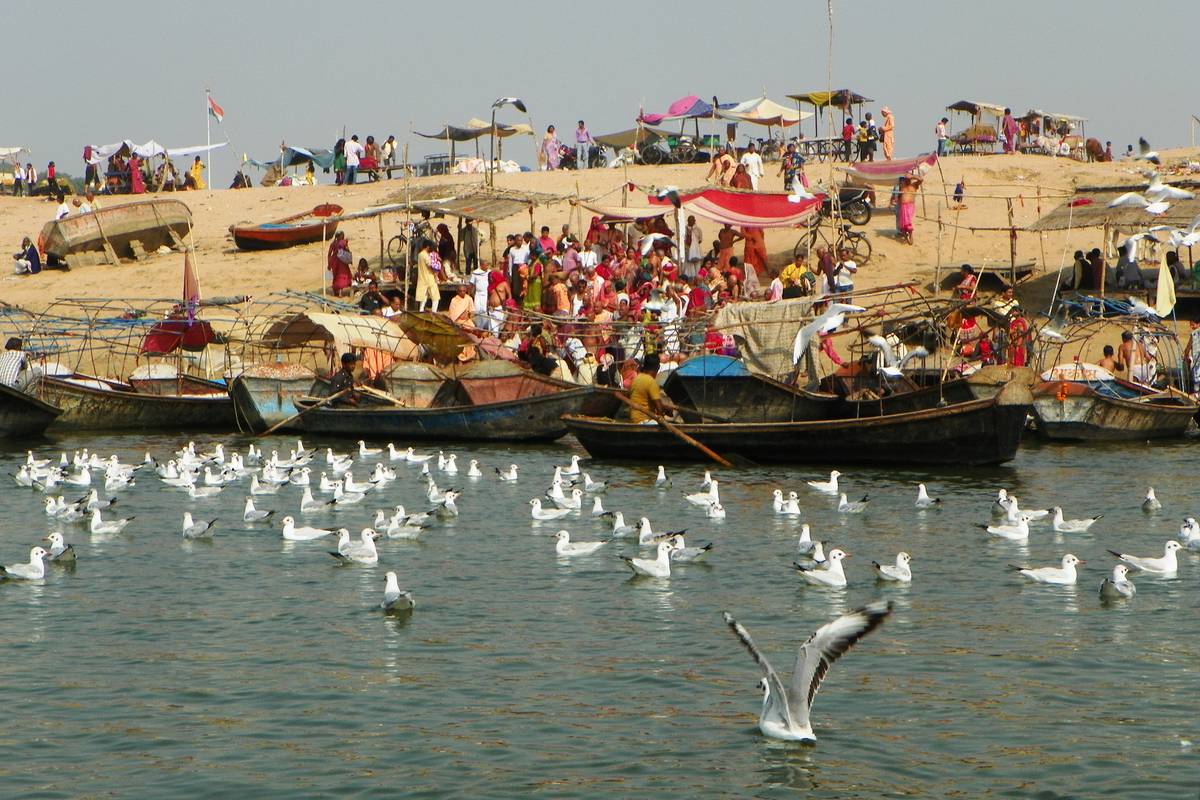
Mauni Amavasya 2027 falls on Saturday, 6 February — in Delhi, in New York, in London, in Berlin, in Mexico City and in Moscow, all six on the same day. No split this time — unlike Shattila Ekadashi four days earlier, which fell on different days on either side of the Atlantic. This one doesn’t. The Amavasya tithi runs 7:05 PM on Friday 5 February to 9:25 PM on Saturday 6 February in Delhi, and the day itself is the new moon of Magha — also called Maghi Amavasya — kept with a holy bath and a vow of silence.
That is the whole of it, and the rest of this page is the detail: the silence and how long to keep it, the bath at Prayagraj on the biggest snan day of the Magh Mela, the tarpan and the giving, the solar eclipse that shares the date, and the two easy mistakes — the Friday that isn’t, and the Kumbh that isn’t.
Mauni Amavasya 2027 at a glance
| Observance, all six cities | Saturday, 6 February 2027 |
| Amavasya tithi, Delhi | 7:05 PM Fri 5 Feb – 9:25 PM Sat 6 Feb |
| Amavasya tithi, New York | 8:35 AM Fri 5 Feb – 10:55 AM Sat 6 Feb |
| Amavasya tithi, London | 1:35 PM Fri 5 Feb – 3:55 PM Sat 6 Feb |
| Amavasya tithi, Berlin | 2:35 PM Fri 5 Feb – 4:55 PM Sat 6 Feb |
| Amavasya tithi, Mexico City | 7:35 AM Fri 5 Feb – 9:55 AM Sat 6 Feb |
| Amavasya tithi, Moscow | 4:35 PM Fri 5 Feb – 6:55 PM Sat 6 Feb |
| The month | Magha, Krishna Paksha (waning fortnight) — Pausha in the Amanta reckoning |
| Also called | Maghi Amavasya; Shani Amavasya in 2027, because the day is a Saturday; Thai Amavasai in Tamil Nadu |
| The season | Magh snana, Pausha Purnima 22 January – Magha Purnima 20 February |
| Sunrise, Delhi | 7:07 AM; sunset 6:04 PM |
| Brahma Muhurta, Delhi | 5:22 – 6:14 AM |
| Brahma Muhurta, Prayagraj | 5:00 – 5:52 AM; sunrise 6:44 AM |
| Nakshatra, Delhi | Shravana until 9:19 PM, then Dhanishtha |
One thing before the rest. Drik lists no festival-specific muhurat for Mauni Amavasya — no snan window, no puja window, only the tithi. This page gives the tithi window and the Brahma Muhurta for each city and invents nothing else. The bath is traditionally taken before sunrise, in the Brahma Muhurta, and that is the time to use.
The Friday that isn’t
The tithi begins on Friday 5 February in every city — in Delhi at 7:05 PM, in New York at 8:35 AM, in Mexico City at 7:35 AM. So plenty of calendar apps will show the 5th, and plenty of people will ask whether the fast is Friday. It isn’t. The observance day is the civil date on which Amavasya is present at sunrise, and that is Saturday 6 February in all six cities. Drik’s own list page settles it directly: the “Magha Amavasya” entry is 6 February everywhere, and the day panchang for the 6th carries the Amavasya through sunrise in every city. New York and Mexico City also carry a separate “Darsha Amavasya” entry on Friday the 5th for the same tithi — that is the same moon, not a second observance.
One honest exception, and it is outside our six cities. On the west coast of North America the day genuinely is Friday 5 February — Los Angeles keeps it on the 5th, because the tithi there runs 5:36 AM on Friday to 7:55 AM on Saturday and the sunrise rule falls the other way. If you live west of New York, do not copy New York’s date onto your city. Check your own city’s panchang, or the Panchang Calculator linked at the end of this page.
And a second, smaller disagreement: Sanatanbodh lists the Delhi tithi as 7:06 PM on the 5th to 9:27 PM on the 6th — one or two minutes later than Drik’s 7:05 to 9:25. This page follows Drik, and a minute or two changes nothing about the day.
What mauna is, and why this Amavasya carries it
Mauna means silence, and the name is the whole instruction. Mauni Amavasya is the new moon that falls in the middle of Magha in the North Indian Purnimanta calendar, and it is the one Amavasya of the year whose name is a practice rather than a date. Some people keep the silence from dawn to dusk. Others keep it for a few hours of the morning, through the bath and the tarpan, and then speak again. The point is attention, not a display — and a person who must speak for work or for care can still keep a quieter day: fewer unnecessary words, a period of sitting still, a lamp lit without conversation.
The silence is the reason this Amavasya is the one people travel furthest for. The Magh snana season runs from Pausha Purnima on Friday 22 January to Magha Purnima on Saturday 20 February, and Mauni Amavasya sits in the middle of it as the biggest snan day of the Magh Mela at Prayagraj — the largest gathering of the whole month-long mela, at the Triveni Sangam, bathed in silence before speaking. The photograph at the top of this page is the Sangam itself: boats, crowds and gulls on the sandy bank, on an ordinary mela morning.
It is also the day the mela counts as the most important for the ancestors. Tarpan — water offered with sesame in the ancestors’ names — and pind daan belong to this morning more than to any other day of the season, and the giving that follows it is the other half of the day: food, grain, warm clothes. A blanket in February is worth more than gold, and the telling is consistent on this point across every source that describes the day. Give first, then eat.
The snan at Prayagraj, and the other mela
Prayagraj holds its annual Magh Mela through this season, from Friday 15 January to Saturday 6 March, and Mauni Amavasya is its biggest bath. The bath is taken before sunrise, in the Brahma Muhurta — at the Sangam that is 5:00 to 5:52 AM, with sunrise at 6:44 AM. The mela administration had not announced its 2027 snan list when this was checked in November 2026, so the date here follows the panchang: check the mela’s notice before you travel, and on the day itself arrive before dawn and follow the administration’s routes, because the biggest day draws the biggest crowds.

Two things the day is not. It is not a Kumbh at Prayag — the last Kumbh there was in 2025, and 2027 is an ordinary Magh Mela year, which is a large thing in itself without borrowing the Kumbh’s name. And it is not only Prayagraj. Haridwar is holding its Ardh Kumbh in 2027 — officially an Ardh Kumbh, six years after the 2021 Kumbh, run at the scale of a full one, from 14 January to 20 April — and Mauni Amavasya, Saturday 6 February, is one of its ten announced snan days, a Main Snan. It is not one of the three Amrit Snans: those are Mahashivratri on 6 March, Phalguna Amavasya on 8 March and Mesh Sankranti on 14 April. If you are going to Haridwar, confirm on the official site, haridwarkumbh.uk.gov.in, before you travel.
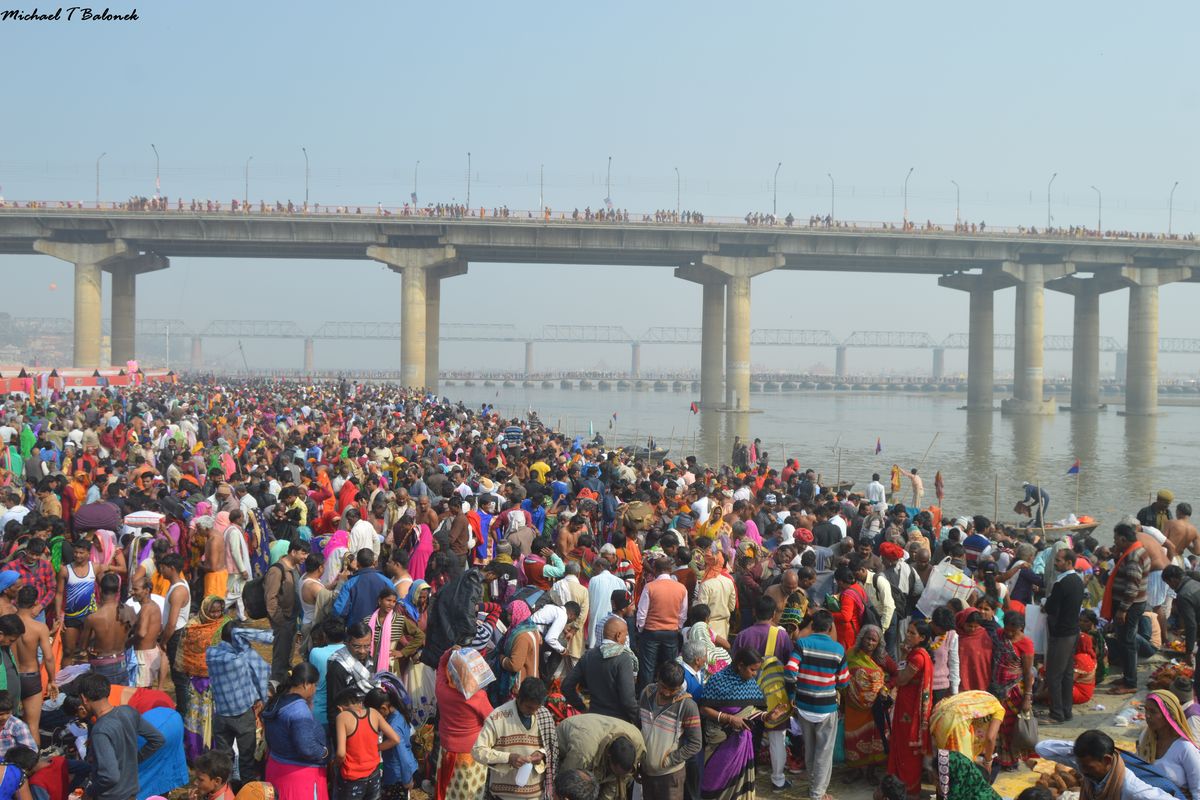
The photograph below is the scale of it — the crowds at the Ganga near Shastri Bridge, at the Kumbh Mela of 2019, not 2027. It is here so you know what the biggest day looks like from the bank, not as a photograph of this year’s mela.
The eclipse on the same day
Drik lists an annular solar eclipse — a Surya Grahan, a ring of fire — on 6 February 2027, on this Amavasya. It is a side note, not the story, and here is why: the path of annularity runs across southern Chile and Argentina and out over the Atlantic to the West African coast, and the partial eclipse is visible across South America and western and southern Africa only. It is not visible from India, and it is not visible from any of our six cities — North America, Europe and Asia see nothing of it. So for readers in Delhi, New York, London, Berlin, Mexico City and Moscow there is no eclipse to watch and no sutak to keep. Do not let anyone sell you a sutak window for this day in these cities. If you happen to be in South America or West Africa on the 6th, check a local panchang — and do not look at the ring without certified eclipse glasses, at any point.
Mauni Amavasya 2027 in India
The observance is Saturday, 6 February. The Amavasya tithi runs 7:05 PM on Friday 5 February to 9:25 PM on Saturday 6 February, and Delhi’s sunrise on the 6th is 7:07 AM with sunset at 6:04 PM. The Brahma Muhurta runs 5:22 to 6:14 AM. The nakshatra is Shravana until 9:19 PM, then Dhanishtha, and Sarvartha Siddhi Yoga runs from sunrise to 9:19 PM.
Where India goes on this day
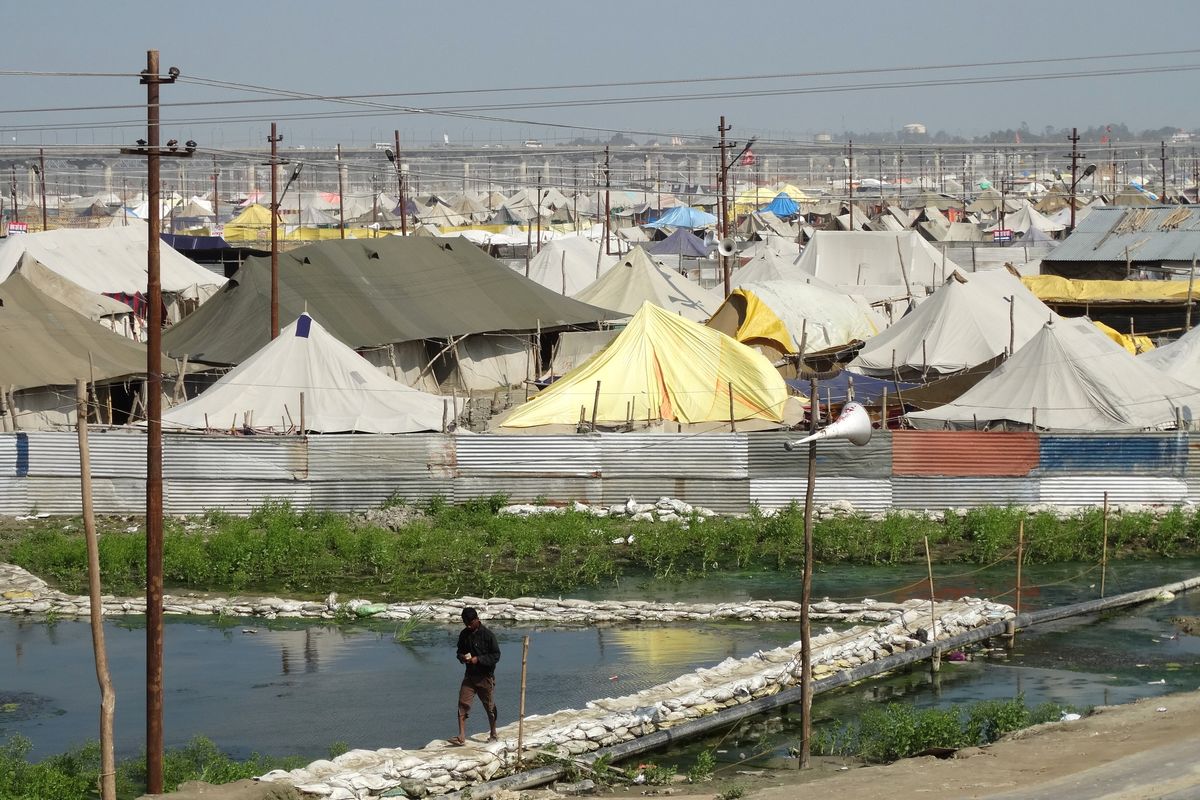
To the rivers, if it can, and to Prayagraj above all. The snan is taken in silence, before speaking — that is the whole shape of the morning: wake in the Brahma Muhurta, bathe, offer tarpan with sesame water, give daan, and only then break the silence. The tents below are the mela itself, the temporary city on the sand at the Sangam, where families stay for the month of Magh.
And a practical note for the Saturday. Because the day is a Saturday it is also a Shani Amavasya, and many families keep it with special daan — black sesame, iron, oil, warm clothes for someone who needs them. If your family keeps Shani Amavasya, this one is already that day; nothing extra needs inventing.
Four days earlier, on Tuesday 2 February, comes Shattila Ekadashi — the sesame fast that opens the month — and the season closes with Magha Purnima on Saturday 20 February, with Vasant Panchami on Thursday 11 February and Ratha Saptami on Saturday 13 February in between. If you are keeping the whole Magh snana, this Saturday is the middle of it, and the one to plan around.
Mauni Amavasya 2027 in USA
The observance is Saturday, 6 February — the same day as India. The tithi runs 8:35 AM on Friday 5 February to 10:55 AM on Saturday 6 February, so the Amavasya covers the whole of Saturday morning and ends just before noon. New York’s sunrise on Saturday is 7:01 AM and sunset 5:20 PM, and the Brahma Muhurta is 5:11 to 6:06 AM.
A Saturday morning, and then the tithi ends
That 10:55 AM ending is the one thing to plan around. The bath, the silence and the tarpan belong to the morning — wake in the Brahma Muhurta, bathe at home with Ganga jal in the water if you have it, keep the silence through the morning, offer the tarpan, and give the daan before the tithi ends. The afternoon is Pratipada, the first day of the bright fortnight, and the day’s observance is done by then.
The Saturday helps. Nobody needs to ask a boss for a morning off, and the silence is easier to keep when the house is not on a work call. A video call home after the morning reaches India in the evening, when Delhi families are lighting the lamp after a day that began four hours earlier — both ends of the call kept the same Amavasya, on the same Saturday, and neither side had to explain the date to the other.
One warning, repeated from above because it is the one that will catch a family out: if you have relatives on the west coast, their day is Friday 5 February, not Saturday. Do not tell Los Angeles to fast on Saturday on New York’s authority.
Mauni Amavasya 2027 in UK
The observance is Saturday, 6 February. The tithi runs 1:35 PM on Friday 5 February to 3:55 PM on Saturday 6 February, so the Amavasya covers the whole of Saturday daylight and then some. London’s sunrise on Saturday is 7:31 AM and sunset 4:59 PM — nine hours and twenty-eight minutes of light — and the Brahma Muhurta is 5:35 to 6:33 AM.
The whole day is yours
London is the most forgiving of the six cities for this one. The tithi does not end until mid-afternoon, so there is no rush to finish the tarpan before noon, and the silence can run from the morning bath through to the evening lamp without watching the clock. The short February day does the rest: the sun is down before five, the lamp is lit early, and the quiet of the evening is the day’s own ending.
A Saturday in London also means the temple is open and full in the morning, which is worth using — the group tarpan, the shared silence, the daan collected at the door. If your temple stages anything for the day, go in the morning; the afternoon is for the home, the lamp and the quiet meal.
Mauni Amavasya 2027 in Germany
The observance is Saturday, 6 February. The tithi runs 2:35 PM on Friday 5 February to 4:55 PM on Saturday 6 February. Berlin’s sunrise on Saturday is 7:40 AM and sunset 5:01 PM — nine hours and twenty-one minutes of daylight — and the Brahma Muhurta is 5:43 to 6:41 AM.
A quiet Saturday, which suits the neighbours too
The same shape as London, an hour later in the day: the Amavasya covers all of Saturday, the silence runs from the morning bath to the evening lamp, and nothing about the day needs hurrying. The practical note from the Dhanurmasam article applies here too — Germany has Ruhezeiten, and a 6 AM alarm and a running tap are still working hours for the neighbours. The home observance is quiet by nature — a bath, a lamp, a small bowl of sesame water — which is one more reason this day travels better than the noisy ones. If your temple stages a reading or a group tarpan, it will be indoors, and the neighbours will never know.
Sesame is easy to find in Germany: black sesame in an Asian grocery, white sesame in any supermarket. The tarpan needs only water and a pinch of it, and the daan — food, warm clothing — is the same in Berlin as in Prayagraj.
Mauni Amavasya 2027 in Mexico
The observance is Saturday, 6 February. The tithi runs 7:35 AM on Friday 5 February to 9:55 AM on Saturday 6 February — the earliest ending of the six cities, so the morning is the whole of it. Mexico City’s sunrise on Saturday is 7:09 AM and sunset 6:32 PM, eleven hours and twenty-three minutes of light, the longest day in this article, and the Brahma Muhurta is 5:28 to 6:19 AM.
The shortest window, and the longest day
Do the morning properly and you are done by ten. Wake in the Brahma Muhurta, bathe, keep the silence, offer the tarpan with sesame water, give the daan — all before 9:55 AM, when the tithi ends. The rest of Saturday is yours, and the long February evening is a good one for the lamp and a quiet meal with the family.
The Indian community in Mexico is small, and this is mostly a home observance there — which is fine, because a home observance is what this day mostly is, even in the telling, once you step outside the temple courtyard. The day needs a bath, a silence, a handful of sesame and a gift. Everything else is commentary. And the sesame is easy to find: ajonjolí in any Mexican market, black and white both.
Mauni Amavasya 2027 in Russia
The observance is Saturday, 6 February. The tithi runs 4:35 PM on Friday 5 February to 6:55 PM on Saturday 6 February, so the Amavasya covers the whole of Saturday and runs into the evening. Moscow’s sunrise on Saturday is 8:14 AM and sunset 5:14 PM — nine hours of daylight, the shortest day in this article — and the Brahma Muhurta is 6:14 to 7:14 AM.
A bath staged in the dark
Moscow’s Brahma Muhurta ends a full hour before the sun is up, and the bath before sunrise happens in full dark — which is the traditional form anyway. The bath at dawn, in darkness, is how the old guides describe the start of a fast day, and a Moscow February simply makes the description literal. The silence afterwards is easier in the dark too: the house is quiet, the city is quiet, and the day begins without anyone having to say anything at all.
The tithi runs until 6:55 PM, so the evening lamp falls inside the Amavasya, and the day can end the way it began — quietly. A video call home after the evening lamp reaches India at around 8:30 PM IST, when Delhi families are sitting down after a day that began four hours earlier. Both ends of the call kept Mauni Amavasya on the same Saturday.
East of Moscow the timings shift with the time zones, as always. Your local temple or your own city’s panchang is the authority there; Moscow’s hours belong to Moscow.
What you’ll need, roughly
Water and a pinch of sesame for the tarpan; a lamp and oil for the evening. Food, grain and warm clothing to give away — a blanket above all, in February. A picture or idol of Vishnu, if your family keeps one for the day, flowers and tulsi. A simple vegetarian meal for the evening, and something to give away first: food for someone who needs it, warm clothing, and dana for the temple. That is the entire list. Mauni Amavasya is not a festival of shopping. It is a bath, a silence, and a gift — and a day kept in the coldest part of the year, when a small warm gift is worth more than a large cold one.
The Kartik–Margashirsha 2026 series: Diwali 2026 · Govardhan Puja 2026 · Bhai Dooj 2026 · Chhath Puja 2026 · Dev Uthani Ekadashi 2026 · Tulsi Vivah 2026 · Dev Diwali 2026 · Kalabhairav Jayanti 2026 · Utpanna Ekadashi 2026 · Margashirsha Amavasya 2026 · Vivah Panchami 2026 · Subrahmanya Shashthi 2026 · Dhanurmasam 2026 · Mokshada Ekadashi 2026 · Margashirsha Purnima 2026 · Akhuratha Sankashti Chaturthi 2026 · Sabarimala Mandala Pooja 2026 · Saphala Ekadashi 2027 · Magh Mela 2027 · Lohri 2027 · Makar Sankranti 2027 · Pongal 2027 · Makaravilakku 2027 · Pausha Amavasya 2027 · Pausha Putrada Ekadashi 2027 · Shakambhari Purnima 2027 · Pausha Purnima 2027 · Thiruvathira 2026 · Shattila Ekadashi 2027 · Mauni Amavasya 2027
Check your own city before you rely on any date here: the Hindu Panchang Calculator shows today’s tithi and festival dates for your location, the Hindu Date Converter converts between Gregorian and Hindu calendar dates, and this article on the astronomy behind the panchang explains how these calculations are actually made.
Photos: Boats at Triveni Sangam — juggadery, CC BY-SA 2.0; Young man bathing at the Magh Mela and Tent city — Adam Jones, CC BY-SA 2.0; Pilgrim crowds at the Kumbh Mela 2019 — Michael T Balonek, CC BY-SA 4.0; all via Wikimedia Commons.
Timings follow Drik Panchang’s city pages for New Delhi, New York, London, Berlin, Mexico City and Moscow, checked 23 November 2026 — the 2027 Amavasya Dates list pages for the tithi windows, and the day-panchang pages for 6 February for sunrise, sunset and Brahma Muhurta. In every city the Nagava karana ends exactly when the list-page tithi ends, which is the cross-check. Drik lists no festival-specific muhurat for Mauni Amavasya, so this page gives the tithi window and the Brahma Muhurta and invents no other window. Other sources give the Delhi tithi a minute or two differently (7:05–9:25 PM on Drik; 7:06–9:27 PM on Sanatanbodh); this page follows Drik. The eclipse path follows Space.com, timeanddate.com and Eclipse Seconds. The Haridwar Kumbh 2027 dates follow the mela administration’s announcement as reported by multiple sources; confirm on haridwarkumbh.uk.gov.in before travelling. The Magh Mela administration’s 2027 snan list had not been announced when this was checked in November 2026. Your local temple’s announcement overrides any website, including this one.