
Akhuratha Sankashti Chaturthi 2026 is Saturday 26 December — and the whole day waits for the moon
Akhuratha Sankashti Chaturthi 2026 is Saturday, 26 December — moonrise 8:19 PM in Delhi, 8:02 PM in New York. The vrat, the moon-curse katha, and the 2027 Sankashti dates.
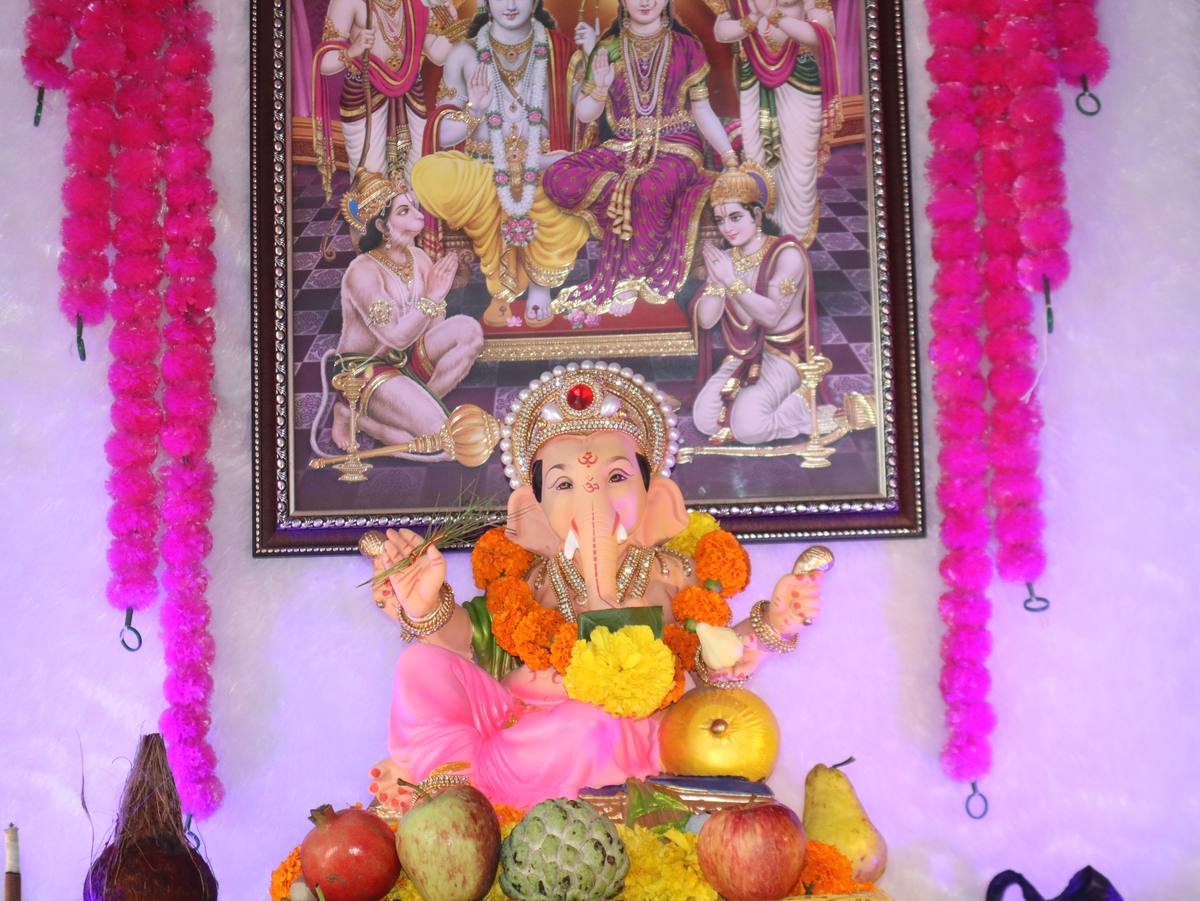
Akhuratha Sankashti Chaturthi 2026 is Saturday, 26 December, in India, America, Britain, Germany, Mexico and Russia — the same day everywhere, no day shift this time. The fast runs from sunrise until the moon comes up, and in Delhi that is 8:19 PM, fifteen minutes after the Chaturthi tithi itself begins.
That is the date, and that is the only time that matters. Everything else on this page — the story, the puja, the list of what you need — is arranged around one event: the moon rising on a December night, and a fast that does not end until you have seen it.
Akhuratha Sankashti Chaturthi 2026 at a glance
| Sankashti vrat | Saturday, 26 December 2026, all six cities |
| The month | Pausha, Krishna Paksha (waning fortnight), Chaturthi |
| The form | Akhuratha — Ganesh as the one whose vehicle is the mouse |
| Chaturthi tithi, Delhi | 08:04 PM Sat 26 Dec – 05:12 PM Sun 27 Dec |
| Chaturthi tithi, New York | 09:34 AM Sat 26 Dec – 06:42 AM Sun 27 Dec |
| Chaturthi tithi, London | 02:34 PM Sat 26 Dec – 11:42 AM Sun 27 Dec |
| Chaturthi tithi, Berlin | 03:34 PM Sat 26 Dec – 12:42 PM Sun 27 Dec |
| Chaturthi tithi, Mexico City | 08:34 AM Sat 26 Dec – 05:42 AM Sun 27 Dec |
| Chaturthi tithi, Moscow | 05:34 PM Sat 26 Dec – 02:42 PM Sun 27 Dec |
| Moonrise, Delhi | 08:19 PM, Sat 26 Dec |
| Moonrise, New York | 08:02 PM, Sat 26 Dec |
| Moonrise, London | 07:20 PM, Sat 26 Dec |
| Moonrise, Berlin | 07:18 PM, Sat 26 Dec |
| Moonrise, Mexico City | 09:21 PM, Sat 26 Dec |
| Moonrise, Moscow | 07:22 PM, Sat 26 Dec |
| Angarki? | No — 26 December is a Saturday; Angarki needs a Tuesday |
| The fast | Sunrise until moonrise; broken only after seeing the moon |
Why the moon runs this day
Sankashti means trouble, or crisis — sankasht is the word for being in difficulty. The vrat is kept to get out of it: a fast to Ganesh, the Vighnaharta, the remover of obstacles, on the fourth day of the waning moon, every month. The fast begins at sunrise and it ends when the moon rises. That is the whole structure. There is no muhurat to calculate beyond the moonrise, which is why the moonrise time is the heart of this page, and why Maharashtra's newspapers and temples announce the city-wise moonrise the way other festivals announce a muhurat.
The reason the moon matters is a story, and it is the story that is told on this day more than any other. One day Ganpati was riding his vahana, the mouse, when he lost his balance and slipped. The Moon saw it and laughed. Ganpati, angered, cursed the Moon: whoever looks upon your face will be blamed unjustly. When the Moon prayed for forgiveness, the curse was softened and limited to the day of Ganesh Chaturthi — but the sting of it stayed in the tradition, and its famous illustration is Krishna and the Syamantak jewel. Having glanced at the Moon on Chaturthi, Krishna was falsely accused of stealing the jewel, and the truth only came out after a struggle with Jambavan and the jewel's recovery.
So on Sankashti the moon is not just a clock. It is the other party in the story — the one who laughed, was cursed, and was forgiven — and the fast ends by looking at it deliberately, offering it water, and making peace with it. Waiting for moonrise is said to teach patience; the arghya, the water offered, is humility; breaking the fast only after seeing the moon is the idea that the reward follows the discipline. That is a devotional reading, not a rule, but it is the reason the evening puja is done facing the moon and not just facing the idol.
There are other stories attached to the vrat, and none of them is the single authoritative version — the tradition itself says so. In one, a childless king and queen, Kritavirya and Sugandhadevi, are advised to keep the Sankashti vrat, rising in the brahma-muhurat, fasting through the day and doing Ganesh puja at moonrise, and are blessed with a child. In another, connected with the Ganesh-devotee sage Bhrushundi, Indra's flying vehicle is grounded by the gaze of a sinner and only rises again once the merit of a Chaturthi vrat is given to it. The shared lesson is the same in all of them: kept with faith and humility, the vrat pleases Ganesh, and troubles are removed.
Akhuratha: the mouse-charioted one
Each month's Sankashti has its own name, because each month's Sankashti honours a different form of Ganesh. December's is Akhuratha. Akhu is the mouse; ratha is the chariot, the vehicle. Akhuratha is Ganesh as the one whose vehicle is the mouse — the small, quick, unnoticed creature that carries the god who removes obstacles. It is a fitting name for a December vrat, kept in the dark half of the year, when the moon is late and the day is short.
The Akhuratha katha, as it is told for this month, is a short one: a man facing opposition and conflict found relief after observing this vrat, his external difficulties easing and his situation improving. It is not a long story with a cast of kings. It is the point of the vrat stated as a story — protection from the difficulties that come from outside, from other people and from circumstances, rather than from within. That is what people ask Akhuratha for.
This is the first Sankashti article on this site, and it is written to anchor the Sankashti pillar: the monthly vrat, with its own name each month, is a series, and this page is the first entry in it. The full 2027 list is at the end of this article.
How the day is kept
The shape is simple, and it is the same shape as the Utpanna Ekadashi and Mokshada Ekadashi fasts, which anyone who kept those will recognise — except that here the day ends at moonrise, not at the next sunrise. Rise in the brahma-muhurat and bathe; by tradition a til, sesame, paste is applied. Take the sankalpa, the spoken resolve, to fast through the day. Through the day, remember and worship Ganpati, and keep the upvas.
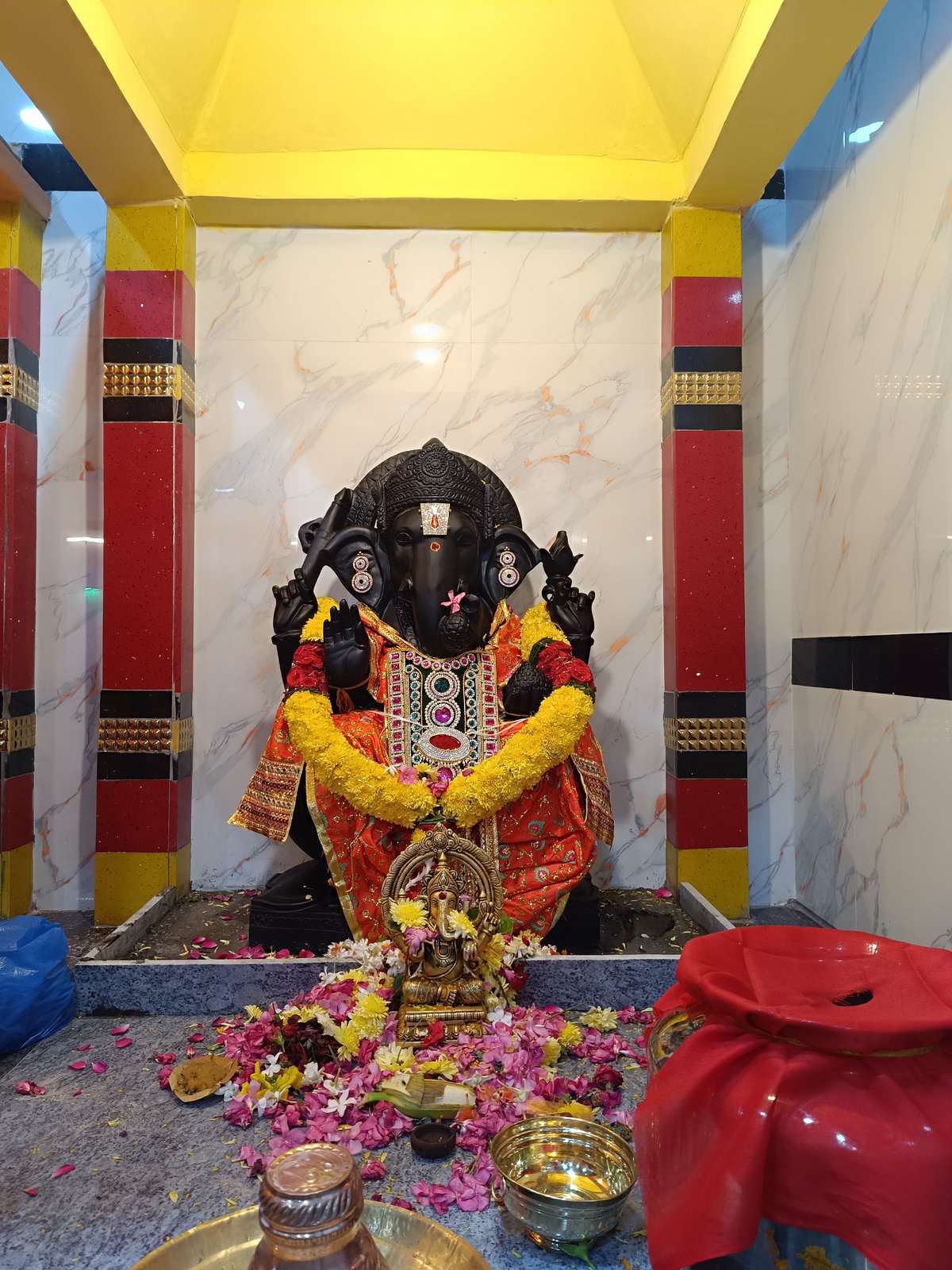
The fast runs from sunrise until darshan of the moon. Some people take phalahar — fruit, sabudana, groundnuts — and some keep a strict or even waterless fast. How strict it is varies by family and tradition, and the honest advice is to take it as your health allows: the fast is long, the parana comes late at night, and people with diabetes, pregnant women, the elderly and children should take relief on medical advice. A fast that harms you is not a better fast.
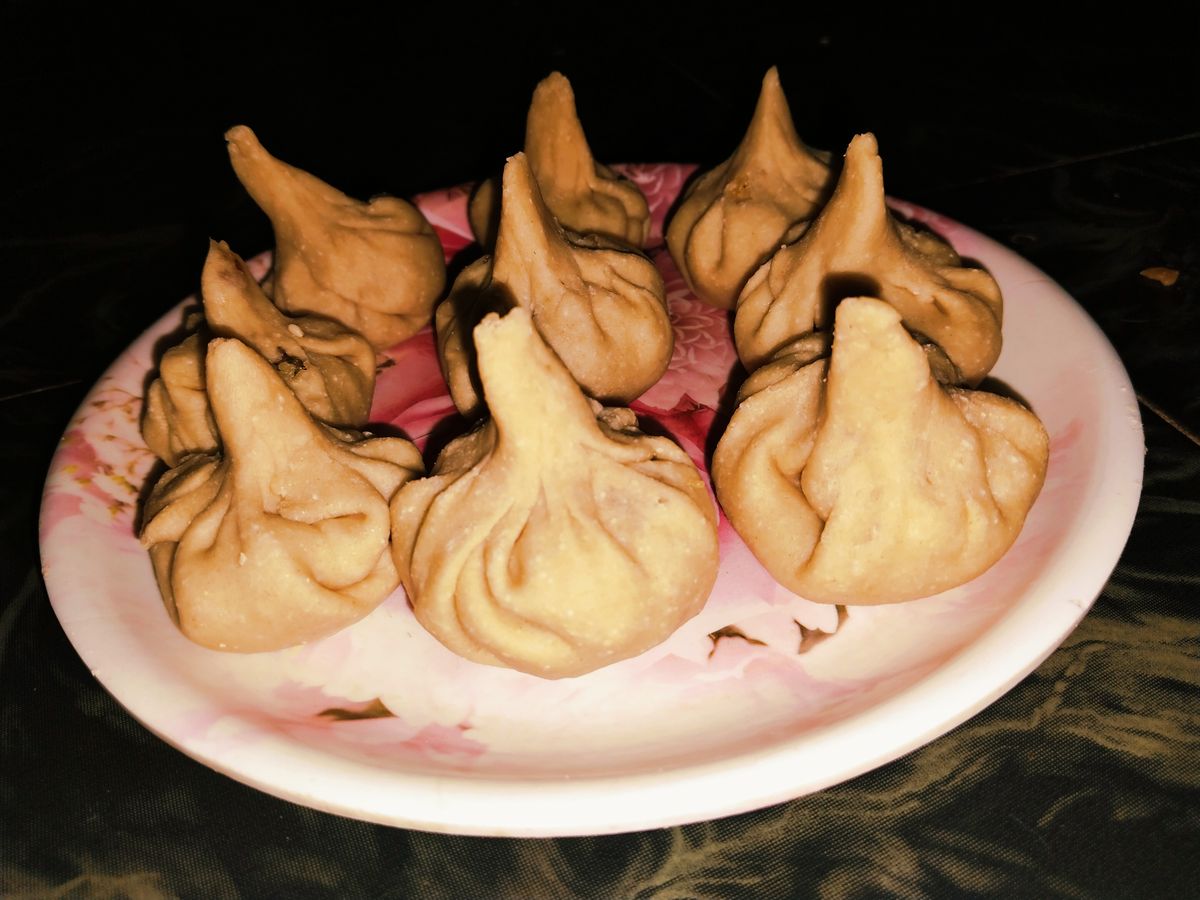
At moonrise, do Ganpati's puja: haldi-kunku, durva grass, flowers, dhup-dip, and modak or ladu as naivedya — twenty-one modaks in some traditions. Then take darshan of the moon and offer it arghya, water, in some traditions with a flower, chandan and akshata added to it, with a prayer to Ganpati. Only then break the fast.
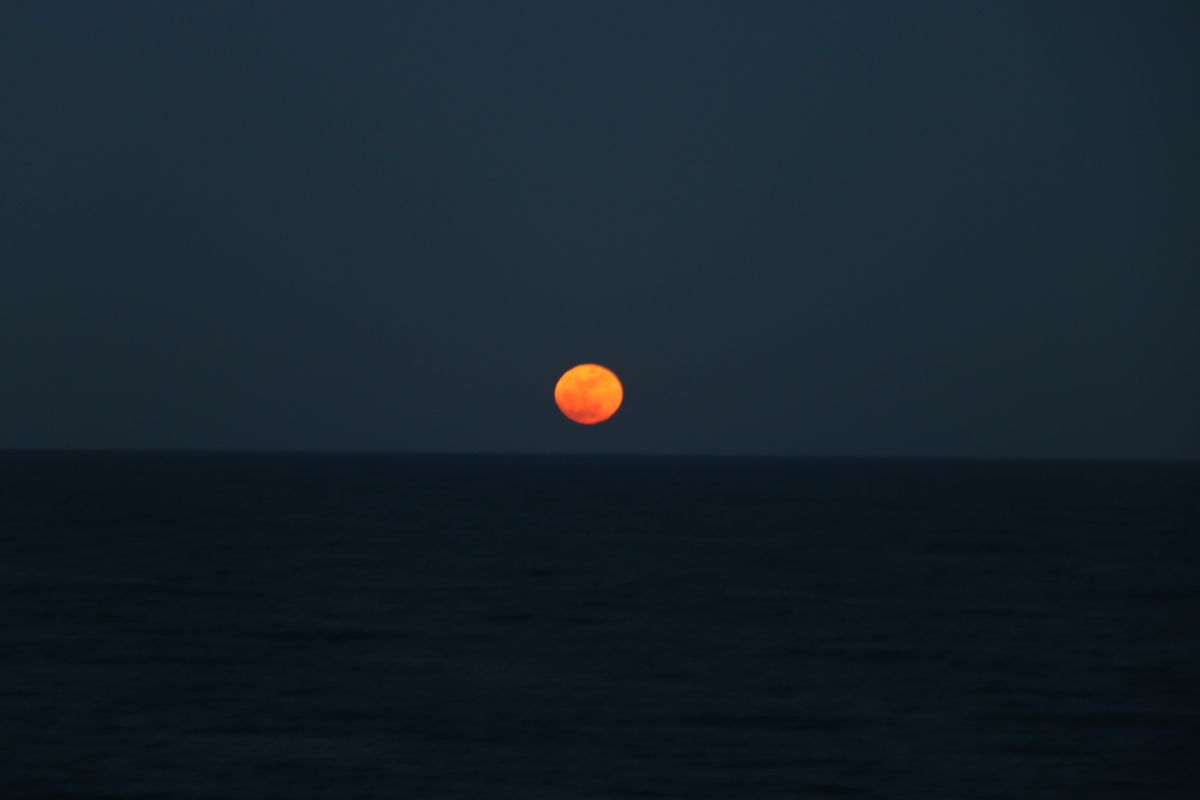
The mantra for the day is short — Om Gam Ganapataye Namah — chanted through the day. After the moonrise puja, the aarti is Sukhkarta Dukhharta, by Samarth Ramdas: Ganpati the giver of happiness and the remover of sorrow. Some families also recite the Ganesh Ashtottara, the Sankatnashan Stotram and Vakratunda Mahakaya. The vrat is sometimes kept for life, sometimes as a sankalp of twenty-one years, sometimes for a single year — that, too, varies by family.
One distinction worth knowing, because the two get confused. The Chaturthi of the bright fortnight, Shukla Paksha, is called Vinayaki Chaturthi. The Chaturthi of the dark fortnight, Krishna Paksha, is Sankashti. Both are monthly Ganesh chaturthis. This one, the fast broken at moonrise, is Sankashti.
What you'll need, roughly
A Ganesh murti or image, haldi-kunku, akshata, durva, red flowers or jaswand — hibiscus — dhup-dip, and modak or ladu for the naivedya. Water for the arghya to the moon. That is the whole list, and it is deliberately small: this is not a festival of shopping. It is a fast, a story, a mouse, and a moon.
Sankashti every month: the 2027 dates
Sankashti comes every month, on the Krishna Paksha Chaturthi, and each month has its own name for Ganesh. There are usually twelve in a year. 2026 had thirteen, because it was an adhik maas year — an extra lunar month. 2027 has twelve, and this is the list, from Drik Panchang for New Delhi. The moonrise times are Delhi's; your own city's will differ by minutes, and occasionally the date itself moves by a day where the moonrise falls on the other side of a tithi change — so check your own city before you plan.
| Date, 2027 | Sankashti | Month | Moonrise, Delhi |
|---|---|---|---|
| Mon, 25 Jan | Lambodara Sankashti (also Sakat Chauth) | Magha | 09:16 PM |
| Wed, 24 Feb | Dwijapriya Sankashti | Phalguna | 10:03 PM |
| Thu, 25 Mar | Bhalachandra Sankashti | Chaitra | 09:49 PM |
| Sat, 24 Apr | Vikata Sankashti | Vaishakha | 10:32 PM |
| Sun, 23 May | Ekadanta Sankashti | Jyeshtha | 10:03 PM |
| Tue, 22 Jun | Krishnapingala Sankashti — Angarki | Ashadha | 09:57 PM |
| Thu, 22 Jul | Gajanana Sankashti | Shravana | 09:27 PM |
| Fri, 20 Aug | Heramba Sankashti (also Bahula Chaturthi) | Bhadrapada | 08:27 PM |
| Sun, 19 Sep | Vighnaraja Sankashti | Ashwina | 08:08 PM |
| Mon, 18 Oct | Vakratunda Sankashti (also Karwa Chauth) | Kartika | 07:35 PM |
| Wed, 17 Nov | Ganadhipa Sankashti | Margashirsha | 08:26 PM |
| Thu, 16 Dec | Akhuratha Sankashti | Pausha | 08:30 PM |
Two things to notice. First, the only Angarki in 2027 is 22 June, Krishnapingala — the only Sankashti in the year that falls on a Tuesday. Second, Akhuratha comes round again on Thursday, 16 December 2027 — ten days earlier than this year, and on a Thursday, not a Saturday. The date moves; the moonrise is what you plan around.
Akhuratha Sankashti Chaturthi 2026 in India
The vrat is Saturday, 26 December. The Chaturthi tithi runs 08:04 PM on Saturday to 05:12 PM on Sunday, and moonrise on Saturday is 08:19 PM in Delhi. Delhi's sunrise on Saturday is 07:12 AM and sunset 05:31 PM. The tithi begins only fifteen minutes before the moon rises, so the evening puja is done almost as soon as the tithi itself begins — there is no long evening of waiting inside the tithi, the way there is in the other cities. The fast, which began at sunrise, is over by half past eight.
Where India goes on this day
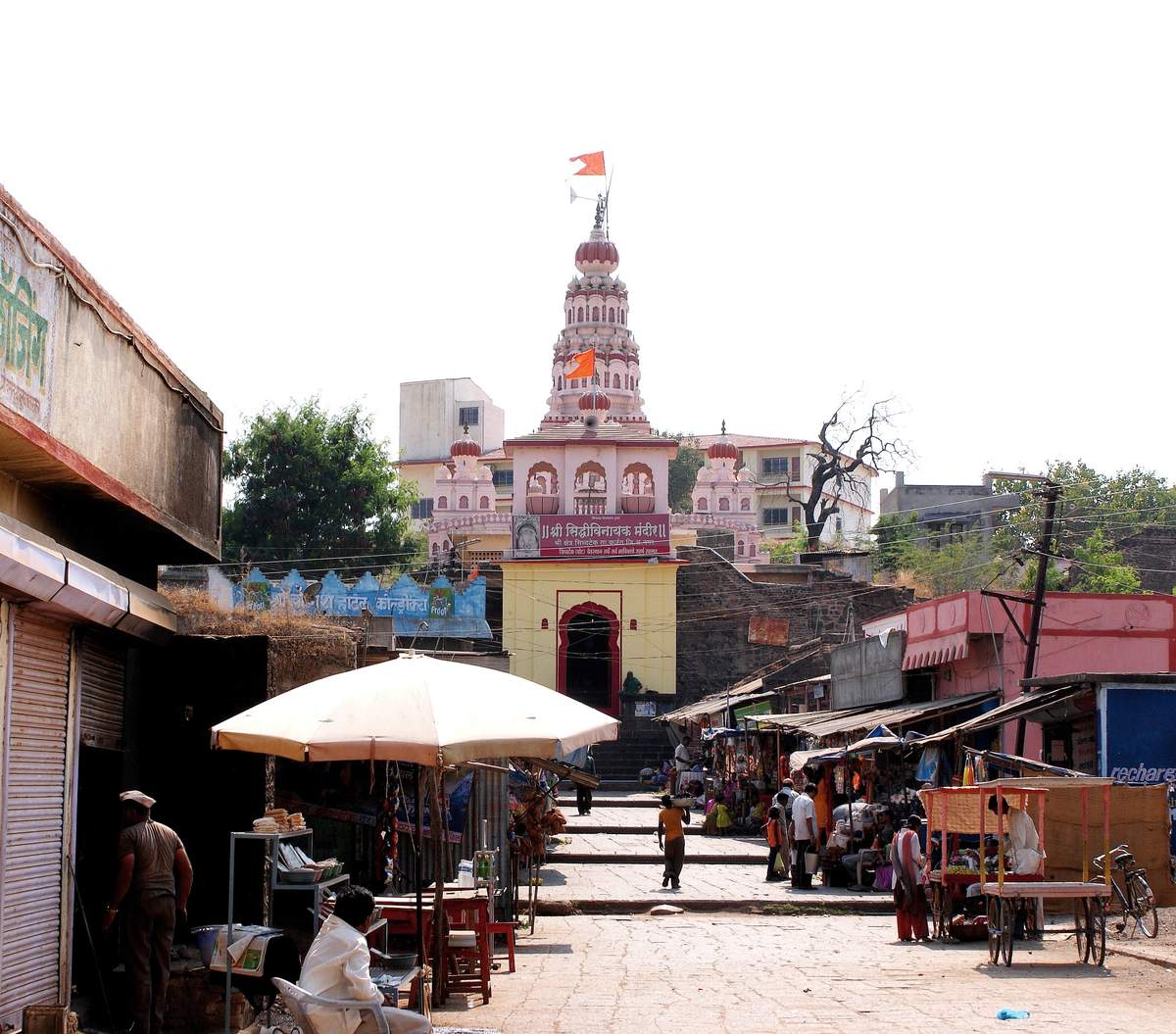
In Maharashtra, where the observance is strongest, the city-wise moonrise is announced in the newspapers, the panchangs and the temples, and the temples fill in the evening. Siddhatek, one of the eight Ashtavinayak shrines, is the place for this vrat in the old sense — the photograph below is its street, the pink shikhara at the end of the market road. Mumbai's Siddhivinayak draws the same evening crowd. Abroad, there is no single temple for it; it is a home observance, which is what this vrat mostly is even in Maharashtra, once you step outside the temple courtyard.
Akhuratha Sankashti Chaturthi 2026 in USA
The vrat is Saturday, 26 December, the same day as India — no day shift on this one. The tithi runs 09:34 AM on Saturday to 06:42 AM on Sunday, so it has been running all day by the time the evening comes. New York's moonrise is 08:02 PM, sunrise 07:19 AM, sunset 04:35 PM. The sun sets at half past four and the moon does not come up until eight — more than three hours of dark waiting, which is the shape of this vrat in an American December. The puja is done in the dark, the lamp lit, the moon watched for.
The call home
A video call home after the evening puja reaches India at around 6:30 AM IST on Sunday, when Delhi families are waking to the last hours of the tithi — it runs until 05:12 PM IST on Sunday there. Both ends of the call kept the same Sankashti on the same Saturday; the American side is just finishing as the Indian side wakes into the tithi's second day.
Akhuratha Sankashti Chaturthi 2026 in UK
The vrat is Saturday, 26 December, the same day as India. The tithi runs 02:34 PM on Saturday to 11:42 AM on Sunday, and moonrise is 07:20 PM — more than three hours after the 03:57 PM sunset. London's sunrise on Saturday is 08:06 AM. The whole day is compressed the way a London December compresses everything: a late sunrise, an early sunset, and then a long dark evening before the moon finally shows. Do not expect to see the moon at sunset; it comes up well after dark, and on a cloudy night it may appear a little late. The fast is broken when you see it, not when the clock says you should.
Akhuratha Sankashti Chaturthi 2026 in Germany
The vrat is Saturday, 26 December, the same day as India. The tithi runs 03:34 PM on Saturday to 12:42 PM on Sunday, and moonrise is 07:18 PM, the earliest of the six cities. Berlin's sunrise on Saturday is 08:17 AM and sunset 03:57 PM — less than eight hours of daylight — so the fast, which began at sunrise, is mostly a dark-day fast, and the moonrise comes early in the evening by the standards of this vrat. The same note as in the Dhanurmasam article: Germany has Ruhezeiten, and a home puja is quiet by nature — a lamp, a verse, a plate of modaks — which is one more reason this vrat travels better than the noisy ones.
Akhuratha Sankashti Chaturthi 2026 in Mexico
The vrat is Saturday, 26 December, the same day as India. The tithi runs 08:34 AM on Saturday to 05:42 AM on Sunday, and moonrise is 09:21 PM, the latest of the six cities. Mexico City's sunrise on Saturday is 07:08 AM and sunset 06:04 PM — nearly eleven hours of light, the most generous December day of the six — and then a wait of more than three hours after sunset before the moon rises. It is the longest wait in this article, and the latest parana. The Indian community in Mexico is small, and this is mostly a home observance there — which is fine, because a home observance is what this vrat mostly is, even in Maharashtra, once you step outside the temple courtyard.
Akhuratha Sankashti Chaturthi 2026 in Russia
The vrat is Saturday, 26 December, the same day as India. The tithi runs 05:34 PM on Saturday to 02:42 PM on Sunday, and moonrise is 07:22 PM. Moscow's sunrise on Saturday is 08:59 AM — seven hours of daylight, the shortest day in this article — and sunset is 04:01 PM. The tithi itself only begins at half past five, and the moon is up less than two hours later, so the evening is short and the puja is done almost as soon as the tithi begins, the way it is in Delhi. The bath before sunrise happens in full dark, which is the traditional form anyway. A Moscow December simply makes the description literal.
East of Moscow the timings shift with the time zones, as always. Your local temple or your own city's panchang is the authority there; Moscow's hours belong to Moscow.
That is the entire day. A fast from sunrise, a story about a mouse and a moon, twenty-one modaks if your family does it that way, and a moon that comes up late on a Saturday night in December. Akhuratha does not ask for much. He asks you to wait for the moon, and then to eat.
The Kartik–Margashirsha 2026 series: Diwali 2026 · Govardhan Puja 2026 · Bhai Dooj 2026 · Chhath Puja 2026 · Dev Uthani Ekadashi 2026 · Tulsi Vivah 2026 · Dev Diwali 2026 · Kalabhairav Jayanti 2026 · Utpanna Ekadashi 2026 · Margashirsha Amavasya 2026 · Vivah Panchami 2026 · Subrahmanya Shashthi 2026 · Dhanurmasam 2026 · Mokshada Ekadashi 2026 · Margashirsha Purnima 2026 · Akhuratha Sankashti Chaturthi 2026
Check your own city before you rely on any date here: the Hindu Panchang Calculator shows today’s tithi and festival dates for your location, the Hindu Date Converter converts between Gregorian and Hindu calendar dates, and this article on the astronomy behind the panchang explains how these calculations are actually made.
Photos: Home Ganesh puja — AmanAgrahari01, CC BY-SA 4.0; Ganesh murti, Ramamandiram, Srikakulam — K.Venkataramana, CC0; Moonrise over the Indian Ocean — Anupam291, CC BY-SA 4.0; Modaks — Yakshitha, CC BY-SA 4.0; Siddhivinayak Temple, Siddhatek — Borayin Maitreya Larios, CC BY 2.0; all via Wikimedia Commons.
Timings follow Drik Panchang's city pages for New Delhi, New York, London, Berlin, Mexico City and Moscow, checked 16 November 2026 — the Sankashti dates list for the tithi windows and moonrise, and the day-panchang pages for sunrise and sunset. The 2027 dates and moonrise times are from Drik's 2027 Sankashti list for New Delhi. Drik gives Delhi moonrise as 08:19 PM; two secondary calendars list 08:13 PM — this page follows Drik. The vrat katha, the puja vidhi, the samagri and the mantra are as given in the Sankashti tradition (Shubh Darshika's Sankashti guide); the Akhuratha katha as told by Astropatri. The 2026 Angarki dates (6 January, 5 May, 29 September) are from Shubh Darshika. Your local temple's announcement overrides any website, including this one.