
Pushkara Snanam 2026: The River Bath of Kartik Purnima
Pushkara Snanam 2026 falls on Kartik Purnima, Tuesday 24 November — the great dawn river bath that closes the month of Kartik snan. Date, tithi timings for India and abroad, the bathing places, the snan mantra and vidhi, and how to take the bath at home.
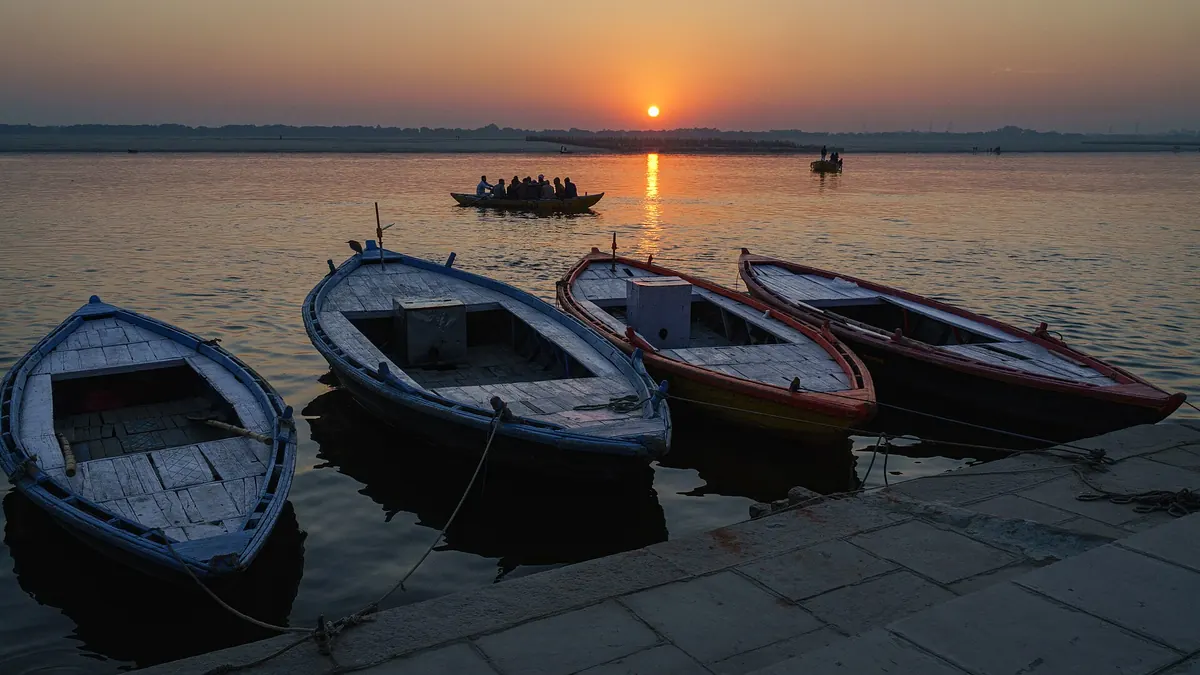
Pushkara Snanam 2026 is taken on Tuesday, 24 November 2026, on Kartik Purnima — before sunrise, in a river, a lake or whatever sacred water you can honestly reach. The Purnima tithi runs from about 11:42 pm on Monday 23 November to 8:23 pm on Tuesday 24 November (IST), and the bath belongs to the dark, cold hour at the end of it: the last dawn of Kartik. If you are on the west coast of North America, your day moves back — the observance there falls on Monday, 23 November, for reasons explained below.
There is no ticket, no queue number, no priest required. There is just a month of early mornings that ends in one great collective plunge — in Pushkar's lake, in the Ganga at Varanasi and Prayagraj, in the Godavari and Krishna down south, and, for the diaspora, in a bathtub in Toronto with a few drops of Ganga jal in the water. All of it counts, and this page explains how.
What Pushkara Snanam is — and what it is not
Open Drik Panchang's festival list for 24 November 2026 and, tucked between Dev Diwali and the Kartika Purnima Vrat, you will find a quiet line: Pushkara Snana — Kartika, Shukla Purnima. That listing is the anchor of this article, and it is worth being precise about what it means. Pushkara Snanam is not a separate festival with its own muhurat and its own mythology. It is the panchang's name for the ceremonial river bath of Kartik Purnima — the bath that the whole month of Kartik has been rehearsing for.
Because Kartik is the month of the dawn bath. All month, devotees rise in the Brahma muhurta and bathe before sunrise — in a river if there is one, under a tap if there is not — and the Purnima bath is the finale, the one taken with the full moon still up and the month's vow complete. The last five days, from Dev Uthani Ekadashi to Purnima, are the Bhishma Panchak, the most charged stretch of the month; Drik's list closes them on 24 November too. Think of Pushkara Snanam as the full stop at the end of Kartik's longest sentence.
The name needs one honest clarification, because it causes real confusion. Pushkara Snanam is not Pushkaram. Pushkaram is the cycle of twelve-year river festivals — one sacred river honoured in turn as Jupiter moves through the zodiac, twelve days of mass bathing on a scale that rivals the Kumbh. Tradition ties both to the same figure: Pushkara, blessed by Brahma, who is said to take up residence in the waters of the river whose sign Jupiter has entered, and whose name clings to sacred bathing generally — and to the town of Pushkar itself. But the Kartik Purnima bath is an annual observance, not a twelve-year event. You do not have to wait for Jupiter. You just have to get up early.
For the record, 2026 did have its Pushkaram — the Yamuna Pushkaram, held 2–13 June 2026 as Jupiter entered Cancer (Karka), the first Yamuna Pushkaram since 2014, drawing pilgrims to Vishram Ghat in Mathura, Keshi Ghat in Vrindavan and the Sangam at Prayagraj. If you bathed then, November's Pushkara Snanam is a homecoming. If you missed it, the Yamuna at dawn on Kartik Purnima is not a bad second chance.
India: the date, the tithi and the rule of the dawn
The rule is simple enough to state in one line: bathe before sunrise on Tuesday, 24 November, while the Purnima tithi is running. The tithi begins at about 11:42 pm IST on Monday night and ends at 8:23 pm IST on Tuesday evening, so the whole of Tuesday's dawn sits comfortably inside it. No separate snan muhurat is published for this bath, and be suspicious of any site that invents one — the muhurat is the dawn itself. In Delhi the sun rises at about 6:50 am that morning; the traditional window is the Brahma muhurta before it, roughly the last hour and a half of the night.
One Varanasi detail worth knowing: Drik's list gives Manikarnika Snan on Monday, 23 November, the day before Purnima — Kashi begins its full-moon bathing a day early at its most famous ghat, and the crowds simply roll on into the 24th. You can check the tithi and sunrise for your own city any time on our Hindu Panchang Calculator.
Where India takes the bath
Pushkar Lake, Rajasthan. The bath that gives this observance its popular name. On the same morning, the Pushkar Mela reaches its climax as pilgrims fill the 52 ghats of the lake that fell from Brahma's hand — the fair's camels and carnival fall silent for an hour while the town bathes.
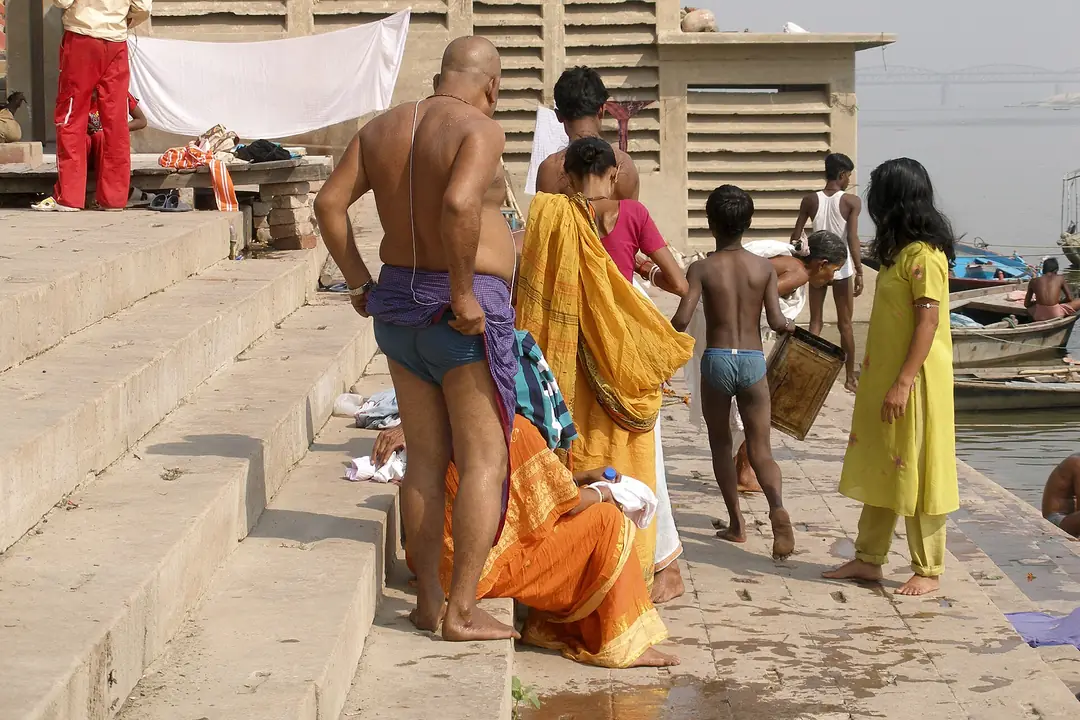
Varanasi. The Ganga ghats from Manikarnika to Assi fill before dawn, and by evening the same riverfront turns into Dev Diwali, a wall of lamps. Bathing at dawn and lamp-lighting at dusk in Kashi on this one day is about as complete as Kartik Purnima gets.
Prayagraj. The Triveni Sangam — Ganga, Yamuna and the unseen Saraswati — is where the Kartik bath carries its heaviest promise in the popular imagination, and the sangam nose is crowded from 4 am.
Garhmukteshwar, Uttar Pradesh. The biggest Kartik Purnima bathing fair most of India has never heard of: lakhs of devotees from western UP and Delhi take the Ganga snan here on Purnima morning, in a mela that briefly turns a small town into a city.
Haridwar and the Yamuna towns. Har Ki Pauri sees its own dawn crowds, and along the Yamuna — Mathura, Vrindavan, and Delhi's old ghats — the bath carries the afterglow of the year's Yamuna Pushkaram.
The Telugu states. Here the frame is different: in the amanta calendar, Karthika Masam runs from 10 November to 8 December, so 24 November is not the month's end but its radiant middle — Karthika Pournami. The dawn Kartika Snanam is taken in the Godavari at Rajahmundry, in the Krishna at Vijayawada, and in temple tanks and village ponds everywhere, and the day closes with lamps rather than goodbyes: deepa daanam, and in many homes the great lamp of 365 wicks, one for every day of the year.
Snan vidhi: how the bath is taken, step by step
- Wake before dawn. The bath belongs to the Brahma muhurta. Set the alarm for the coldest, darkest hour — that is rather the point of it.
- Take the sankalp. Standing at the water's edge (or beside your bath at home), cup a little water in your palm and state your intention: your name, your place, and that you take this Kartik Purnima snan for the merit of the month and the peace of your family and ancestors. Then let the water go.
- Recite the Kartik snan verse. The sankalp verse the Kartika tradition hands down — printed, among other places, in the Kamakoti edition of the Skanda Purana's Kartika section — is this:
Kartike'haṁ kariṣyāmi prātaḥ-snānaṁ Janārdana ।
prītyarthaṁ tava Deveśa Dāmodara mayā saha ॥
(कार्तिकेऽहं करिष्यामि प्रातःस्नानं जनार्दन। प्रीत्यर्थं तव देवेश दामोदर मया सह॥)
"O Janardana, in this month of Kartik I take my morning bath — for your pleasure, O Lord of gods, O Damodara, together with your consort." If Sanskrit is not yours, say the meaning in your own language. The tradition is older than any of its spellings. - Enter the water and dip. Wade in, face the rising sun, and immerse yourself fully — traditionally three dips, holding the sankalp in mind. At a crowded ghat, follow the local flow and the lifeguards' ropes; the merit is in the dip, not the depth.
- Offer arghya. Standing in the water, lift cupped handfuls to the rising Sun, and to Vishnu as Damodara — the Kartik month's presiding form — letting the water pour back through your fingers.
- Remember the ancestors. Many families add a simple tarpan — water offered with sesame for the pitrs — especially at the Sangam and at Garhmukteshwar, where the Purnima fair is as much about the departed as the living. Follow your family's custom; there is no single rule.
- Dress, tilak, tulsi. Dry clothes, a tilak of sandal or ash, and a moment before the tulsi plant when you get home. The bath is done; the day is not — see deep daan below.
After the bath: deep daan and the rest of Purnima
A Kartik Purnima that ends at the bath is only half observed. The evening belongs to deep daan — lamps offered at the river, the temple and your own doorstep — and to the Satyanarayan katha and the charity that traditionally closes the month: food, warm clothes and sesame given away while the full moon is up. All of that — the Tripurasura story, the Dev Diwali lamps, the vrat rules city by city — is covered in our full guide to Kartik Purnima 2026. Bathe in the morning; light the lamp in the evening; the day holds together.
United States: two dawns, two dates
America splits in half this year, and it is worth understanding why, because the same split will confuse you again. The Purnima tithi ends on Tuesday morning in every US time zone — at 9:53 am Eastern, 8:53 am Central and 6:53 am Pacific. On the Pacific coast, sunrise on Tuesday comes at about 7:05 am — after the tithi has already ended. A dawn bath on Tuesday there would miss the full moon entirely, so panchang listings for the west coast put Kartik Purnima, and with it the Pushkara Snanam, on Monday, 23 November. On the east coast, Tuesday's dawn (sunrise about 6:53 am in New York) still sits inside Purnima, and the bath stays on Tuesday.
New York and New Jersey
Tuesday, 24 November. Bathe before the local sunrise, while Purnima runs (it holds until 9:53 am). Temples across Edison and the New Jersey corridor run Kartik Purnima programmes the same day; the home bath before dawn plus an evening temple visit is the pattern most families keep.
Chicago and Houston
Listed as Monday, 23 November in Drik-based festival calendars for the Central zone, even though the tithi technically runs until 8:53 am on Tuesday — the listings place the observance on the day the full moon rules the evening and the vrat. If your temple observes on Monday, bathe Monday before sunrise and you are in step with your community; a Tuesday dawn bath is still within the tithi. When the panchang and the calendar argue, follow your temple — it is the tiebreaker this festival keeps coming back to.
San Francisco Bay Area and Seattle
Monday, 23 November, clearly. Purnima begins Monday at 10:12 am and ends Tuesday at 6:53 am, before sunrise, so Monday is the only dawn the full moon offers you. A pre-sunrise plunge in the Pacific in late November is for the very committed; everyone else takes the home bath described below, and nobody's grandmother in Fremont is doing otherwise.
United Kingdom
London keeps Tuesday, 24 November. Purnima begins Monday at 6:12 pm and runs until Tuesday at 2:53 pm, so Tuesday's late dawn — sunrise is about 7:33 am — is comfortably inside it. There is no river-bath culture to borrow here and the Thames is neither sacred nor safe for a dawn dip; the British observance is a home snan before sunrise, a lamp at the door in the evening, and Kartik Purnima programmes at temples in London, Leicester and Birmingham. If your temple lights its Dev Diwali lamps on the Monday evening instead, that is about the lamps' dusk rule, not the bath — the bath stays Tuesday.
Canada
Canada splits the way the US does. Toronto and the east: Tuesday, 24 November — the same tithi window as New York, Purnima until 9:53 am, with big Kartik Purnima gatherings at the temples of Brampton and Mississauga. Vancouver, Calgary and Edmonton: Monday, 23 November, following the west-coast logic. A practical word for the Prairies: a late-November dawn in Calgary is well below freezing, and the tradition has never required frostbite. The warm home bath before sunrise is not the diaspora cutting corners — it is the diaspora doing exactly what the home-bath rule exists for.
UAE
Dubai keeps Tuesday, 24 November, with a generous window: Purnima begins Monday at 10:12 pm and lasts until Tuesday at 6:53 pm. Sunrise is about 6:42 am, so the dawn bath at home, a Satyanarayan katha in the evening, and deep daan at the Bur Dubai temples is the shape of the day for most Hindu families in the Emirates. There is no public river or creek bathing tradition to join here, and the sea at dawn is not the done thing — Kartik Purnima in the Gulf is a home-and-temple festival, and it loses nothing by it.
Australia
Sydney keeps Tuesday, 24 November, and gets the prettiest timing of any city on this page: the Purnima tithi begins at 5:12 am AEDT on Tuesday, barely half an hour before the 5:39 am sunrise — the full moon arrives almost exactly with the dawn you are meant to bathe in, and it lasts until 1:53 am on Wednesday. It is late spring, the water is not cold, and a dawn dip in the ocean or a river is genuinely possible for Australians in a way it simply is not in Calgary. Temples in Sydney and Melbourne hold Kartik Purnima programmes the same day; check yours for the evening katha.
Reading this from somewhere else entirely? The tithi is one moment worldwide — only its local clock time changes. Convert any date with our Hindu Date Converter, and when a local listing and this page disagree, your temple's calendar wins.
No river near you? The home snan, honestly done
The tradition saw you coming. Long before there was a diaspora, the acharyas were ruling on baths taken far from any tirtha: Acharya Madhva's compilation of the Kartika practice describes the snan as, in essence, an abhisheka offered to the Lord who dwells within — the river is the ideal, not the entry ticket. The home form is simple and it is real:
- Add a few drops of Ganga jal to your bath water, if you keep it — most diaspora homes do, in a small bottle that has crossed more oceans than the family has.
- Bathe before your local sunrise, keeping the same sankalp and the same verse as at the riverbank.
- Offer arghya to the rising sun from a window or balcony, water poured slowly from a small lota or glass.
- Light the lamp, sit for two quiet minutes, and let the day proceed to its evening half — the deep daan.
And a word the shastras themselves would insist on: the water does not have to be cold. Warm water harms nothing. The vow is in the rising and the remembering, not in the shivering — least of all for the elderly, the unwell and small children, who should be handed the warm version without a flicker of guilt.
Featured image: Sunrise over the Ganges at Varanasi — Schwiki, CC BY-SA 4.0, via Wikimedia Commons. Body image: Hindu pilgrims bathing in the Ganges at Varanasi — Vyacheslav Argenberg, CC BY 4.0, via Wikimedia Commons.