
Pushkar Mela: Tales of a Holy City — पुष्कर मेला
Pushkar Mela 2026 runs 17–24 November, ending with the Kartik Purnima snan in Pushkar Lake. The story of Brahma's lotus, Savitri's curse, 3,800 camels, a 14-inch cow, and the world's most joyful fair — dates, tales and the best things to do.
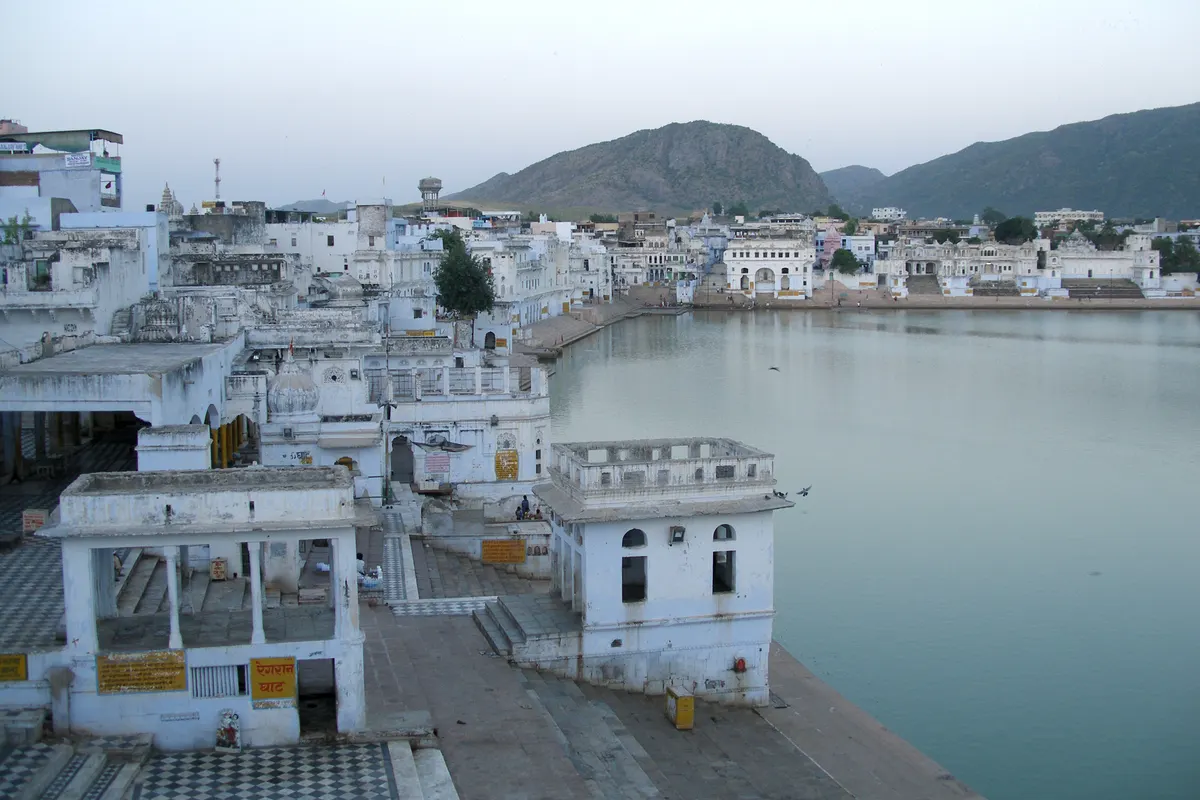
Every November, a small temple town in the Aravalli hills does something no other place on earth quite manages. It hosts the world's most famous camel fair and one of Hinduism's holiest pilgrimages at the same time, on the same few streets, around the same sacred lake. Priests and camel traders. Pilgrims and hot air balloons. Aarti bells and carnival rides. This is the Pushkar Mela — part livestock market, part religious festival, part village fair on steroids — and in 2026 it is having one of its best years in a long time.
The fair is on right now. If you are reading this during the mela days, the camels are already in the dunes, the contests are running at the Mela Ground, and the town is building towards its great finale: the Kartik Purnima snan in Pushkar Lake on Tuesday, 24 November 2026.
Pushkar Mela 2026: dates and the shape of the fair
The official Rajasthan Tourism programme runs for eight days, Tuesday 17 November to Tuesday 24 November 2026, and entry to the Mela Ground and its events is free. But the fair really works on three clocks at once:
- The herders' fair starts first. Camel and horse breeders begin pitching camp in the dunes from around 10 November, and the livestock fair run by the Animal Husbandry Department stretches a little beyond the official programme, to about 26 November.
- The tourism programme — the contests, folk nights and stadium events — runs 17 to 24 November, opening with a puja and flag hoisting at the Mela Ground at 10 in the morning on the 17th.
- The religious fair builds from Prabodhini Ekadashi (20 November) to Kartik Purnima (24 November). The full-moon tithi itself runs from about 11:42 pm on 23 November to 8:23 pm on 24 November (IST), and the holy dip happens before sunrise on the 24th.
Which days should you pick? Go early for the animals — the trading and the great camel camps are at their best in the first half. The middle days belong to the competitions. And the last two days belong to the pilgrims, when the town fills to bursting and every ghat is lit with lamps. You can check the tithi for your own city any time on our Hindu Panchang Calculator.
The lake that fell from Brahma's hand
Pushkar is old in a way that is hard to overstate. The town appears in the Ramayana and the Mahabharata, and Hindus count its lake among the five sacred sarovars. Pushkar is called Tirth Raj — the king of pilgrimage places — and the saying goes that a pilgrimage is not quite complete until you have bathed here.
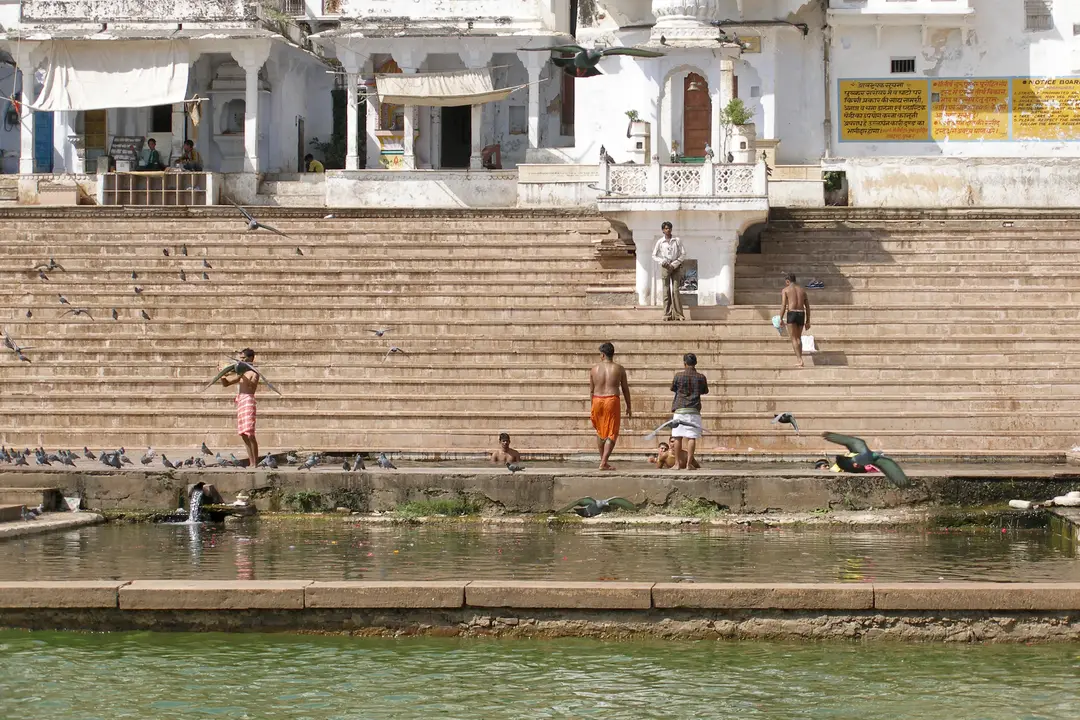
The story of how the lake came to be is the first tale of Pushkar, and the town still tells it with a straight face. The demon Vajranabha was tormenting the people of the region, so Brahma, the creator, struck him down with a lotus flower. As the lotus fell, its petals touched the earth at three places — and where they landed, water sprang up. Those three spots became the three Pushkar lakes: Jyeshtha (the eldest), Madhya (the middle) and Kanishtha (the youngest). "Pushkar" itself is said to come from pushpa (flower) and kar (hand) — the flower that fell from Brahma's hand.
Another tale: the lake of Shiva's tears
Another tale, though, tells the lake's birth very differently — and much more sadly. When Sati died, Shiva lifted her body onto his shoulder and wandered the earth, inconsolable. As he walked, he wept, and two of his tears fell to the ground and became lakes: one here at Pushkar, and the other far away at Ketaksha — "raining eyes" in Sanskrit — the pool of the Katas Raj temples in what is now Pakistan's Punjab. Some tellers go further: the two lakes, they say, are Shiva's two eyes, Pushkar the right and Katas the left, still open, still wet. It is the tradition the Katas temples themselves hold dear, and Pushkar has never quite denied it — a town can hold two stories about its water, and love them both.
Brahma then decided to perform a great yajna on the shore of the eldest lake. That decision set off the most famous domestic dispute in Hindu mythology.
Savitri's curse: why the creator has almost no temples
For the yajna, Brahma needed his wife beside him. Savitri, delayed by her preparations (the goddesses, in the telling, were still getting ready), did not arrive in time — and a yajna cannot wait for an auspicious moment that is passing. So Brahma married a local girl, Gayatri, and completed the ritual with her seated beside him.
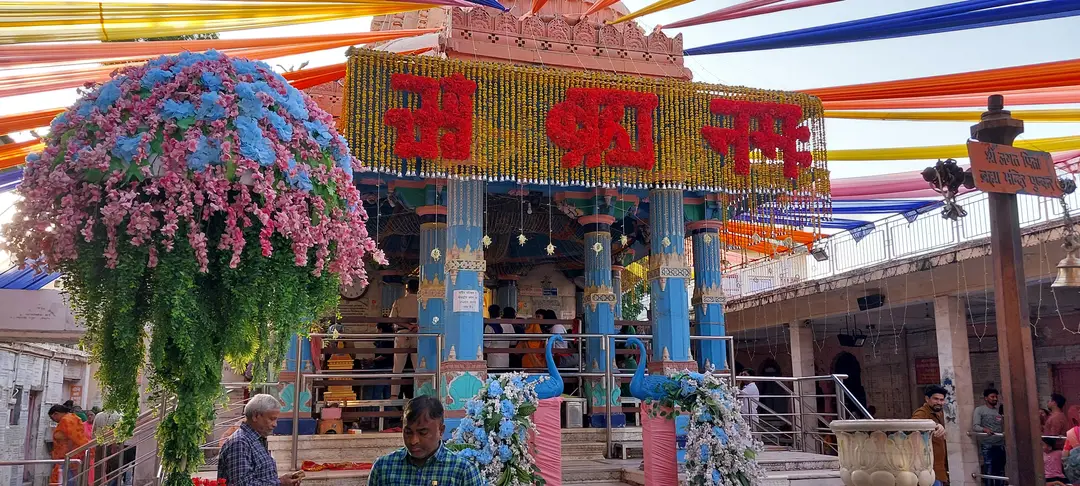
When Savitri finally arrived and saw another woman in her place, her curse fell like a hammer: Brahma, worshipped everywhere as the creator, would have temples almost nowhere. He would be worshipped at Pushkar — and essentially only at Pushkar. She then withdrew to the Ratnagiri hill above the town, where her temple still stands, watching. Gayatri's temple sits on the opposite hill. Locals will tell you, with a smile, that the two are still not on speaking terms — and that Brahma's famous temple in the bazaar below, with its red spire and silver coins pressed into the floor by generations of devotees, exists because of a wife's anger as much as a god's glory.
It is one of the very few Brahma temples in the world, and on Kartik Purnima — the day of Brahma's yajna — Pushkar becomes, briefly, the centre of the Hindu universe.
From pilgrimage to camel fair: a short history
Nobody knows exactly when traders started timing their business with the Kartik Purnima pilgrimage, but the logic is ancient and obvious: when lakhs of people gather in one small town, you bring your animals to sell. For well over a century, the religious fair and the livestock fair have grown around each other, until the camel trading became so large that the world's travellers started calling the whole thing the Pushkar Camel Fair.
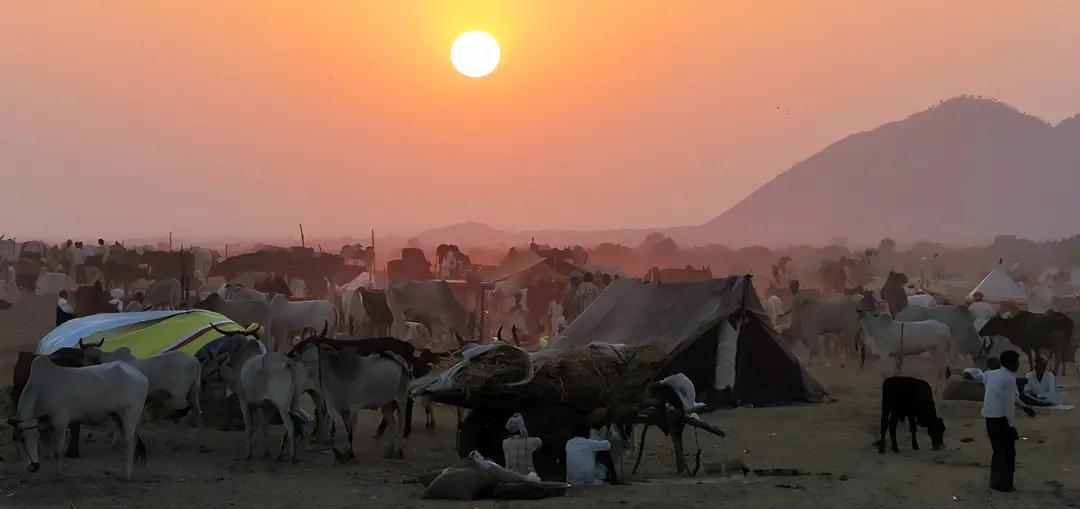
In its glory decades, the fair drew camels in numbers that are hard to picture now — officials of the Animal Husbandry Department speak of an era of nearly a lakh of camels. Then tractors replaced carts, highways replaced caravans, and the camel economy shrank. Arrivals fell to just 1,576 camels in 2025.
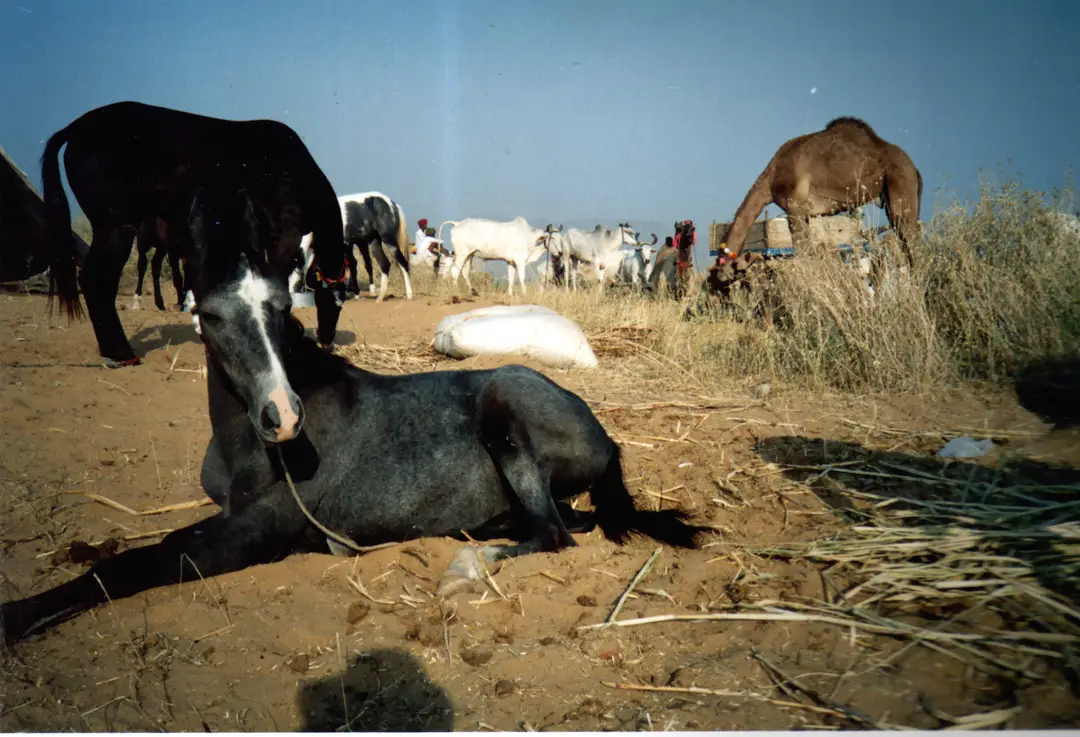
Which is what makes 2026 worth writing about. With restrictions on the interstate movement of camels removed, nearly 3,800 camels reached Pushkar this year — the highest in five years. The dunes are full again. The department says it wants to rebuild the fair towards its old scale, with ideas like a camel village and camel polo in the works. The Pushkar Mela, reports of its decline greatly exaggerated, is back.
Tales from the fairground: the 2026 edition
Every year the fair throws up a few characters who steal the show from the camels. This year's smallest celebrities are also its biggest crowd-pullers: Bhalu, a Shetland pony just 36 inches tall, and a Punganur cow all of 14 inches — one of India's rare dwarf desi breeds — which her keeper, Jaipur's Abhinav Tiwari, proudly tells visitors gives three litres of milk a day. Beside the towering Marwari horses, people queue just to stare at them.
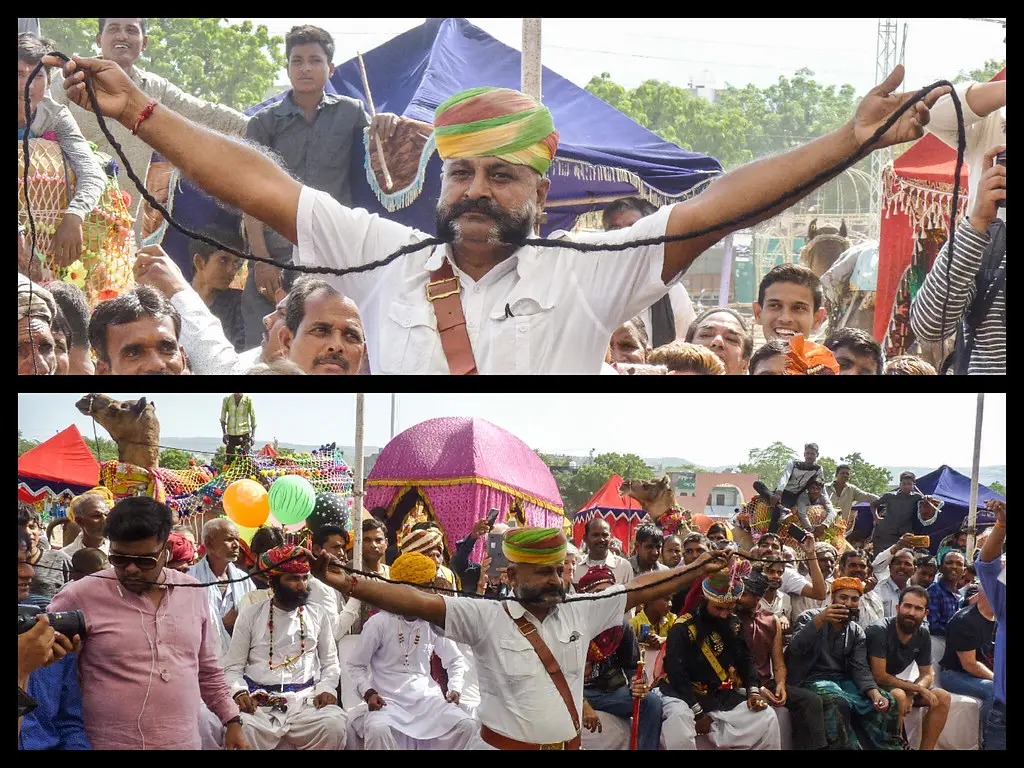
Then there are the contests, which Pushkar takes deadly seriously and everybody else finds hilarious. In the turban-tying competition for foreign couples — the women must tie a proper safa on their partner and apply a tilak, against the clock — first place this year went to ACR and Bitty from Mexico, with Italy second and England third. In the great moustache competition, 39 men competed and Kamlesh Bunkar of Jaipur took first prize. But the photograph everyone went home with was of Mohan Singh of Ajmer, known at the fair as "Ravan Sarkar", who had arrived with the name of Lord Brahma fashioned out of his own enormous moustache.
And because it is 2026, the fair also produced a viral star: videos of a visitor flashing a bundle of ₹500 notes and demanding ₹20 lakh on the spot in a horse deal have been racing around social media. Whether any horse actually changed hands at that price, nobody has verified — at Pushkar, the haggling has always been half the theatre.
Fun things to do at the Pushkar Mela
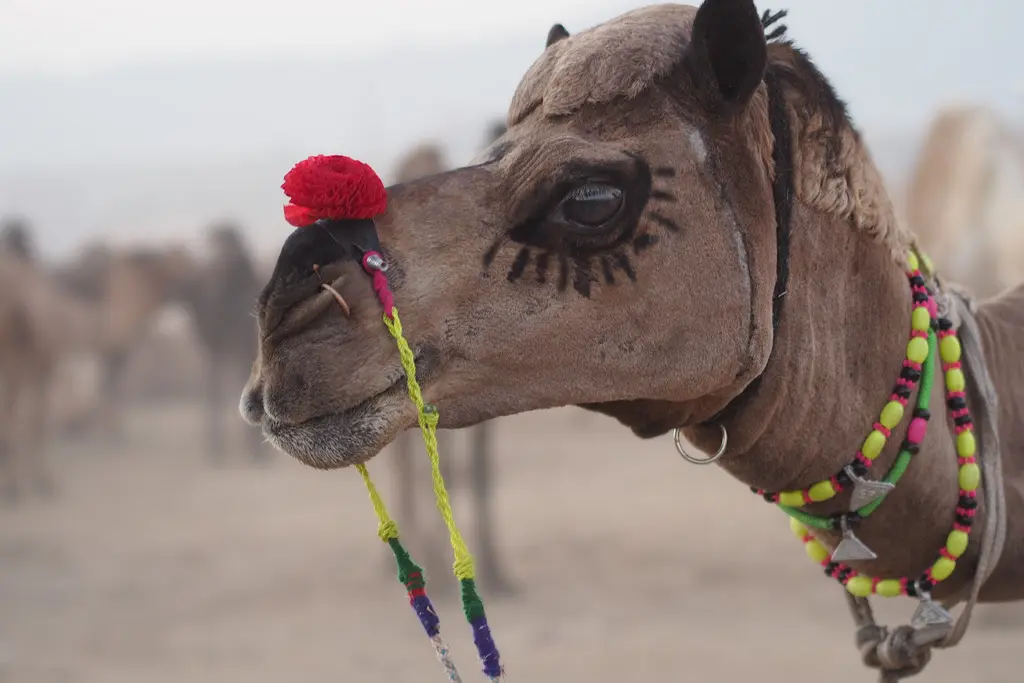
Watch the camels compete. The camel decoration contest (this year on 18 November) is the fair's fashion week: animals arrive with dyed and patterned coats, mirrored bridles, pom-poms, anklets and entire wedding parties painted on their flanks. The camel dance competition follows, in which trained camels step, turn and bow to their master's commands. It is exactly as strange and delightful as it sounds.
Cheer the village games. Langri taang (one-legged hopping races), satolia, gilli danda, matka races, musical chairs, tug of war — and the fixtures everyone waits for: kabaddi and football, locals versus foreigners. The visitors occasionally win. Nobody minds either way.
Enter the Maut ka Kuan — as a spectator. The "Well of Death" is the great Indian mela institution: a vast wooden barrel inside which motorcyclists, and then a car, circle the vertical walls at speed, held up by nothing but momentum and nerve, while the crowd watches from the rim above. It is loud, dusty, faintly terrifying and completely unmissable.

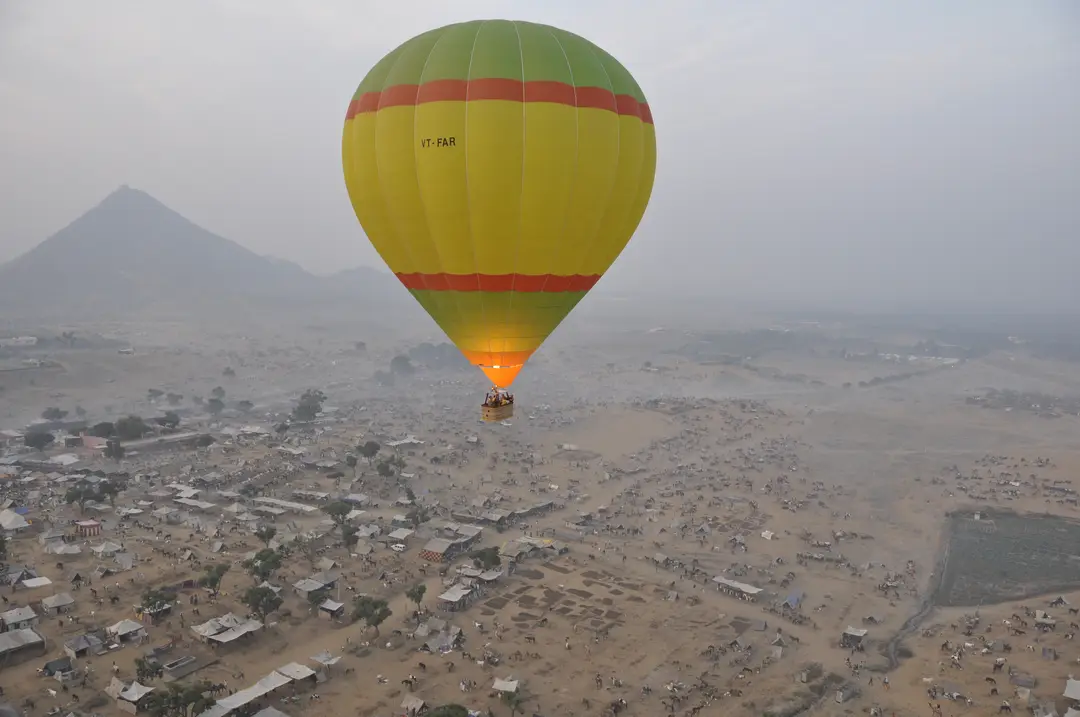
Take the sky at dawn. Hot air balloons lift off over the fairground in the early morning (this year around 21–24 November), when the dunes are gold, the camel camps are waking up and the lake is still. From a few hundred feet up, the whole mad, beautiful geometry of the fair makes sense.
Graze through Shilpgram. The food and craft festival brings Rajasthan onto a plate and into a bazaar: kachori and malpua, camel-milk products, puppets, blue pottery, leatherwork, block prints. Pushkar's other famous crop perfumes the whole town — this valley grows roses on a serious scale, and the gulkand, rose water and attar sold here are the real thing.
End the day at the ghats. As the light goes, the fair's noise falls away and the lake takes over: deepdaan — hundreds of small lamps set floating on the water — and the maha aarti on the ghats. Whatever you came for, this is the Pushkar you will remember.
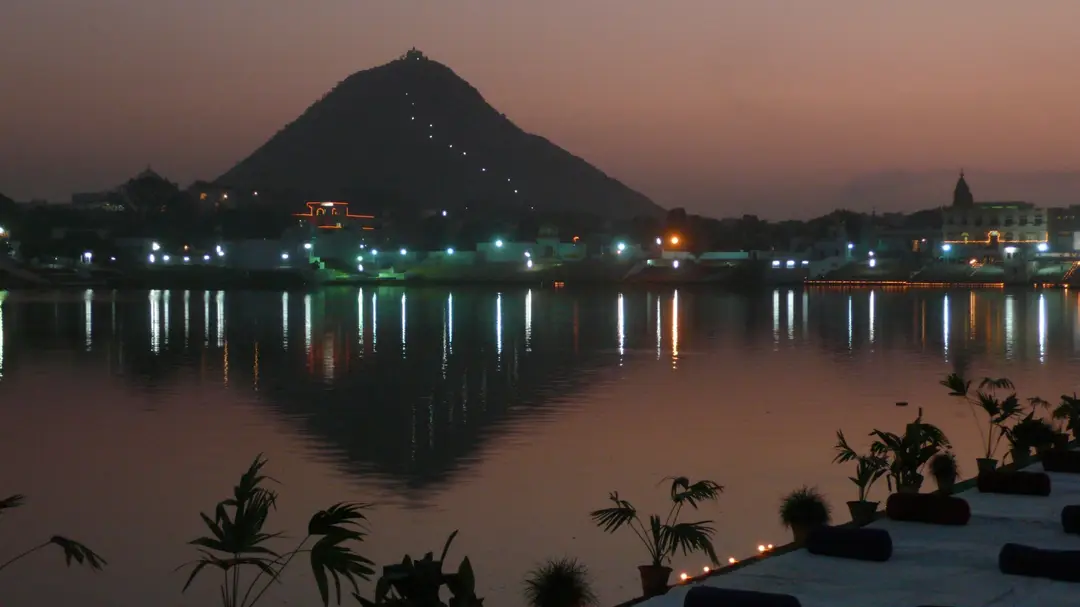
One practical note that surprises first-time visitors: Pushkar is a holy town, and it is strictly vegetarian and alcohol-free — eggs included. The cafes lean into it; you will eat very well, just differently.
Kartik Purnima at Pushkar: the snan that ends the fair
Underneath the camels and the carnival, the mela exists for one reason: the water. The five days from Prabodhini Ekadashi to Kartik Purnima are the Panch Tirtha days, when bathing in Pushkar Lake is believed to carry the merit of years of worship. On the morning of Tuesday, 24 November 2026, before the sun is properly up, the 52 ghats around the lake will be full — pilgrims who have waited all year, taking the Kartik snan in the lake that fell from Brahma's hand.
The fair then closes the way it should: a closing ceremony and prize distribution at the Mela Ground late in the morning, and in the evening, at 6 pm, the Pushkar Raj maha aarti on the ghats. If you can only be in Pushkar for one day of the mela, this is the day — but book nothing and expect crowds everywhere. (Travelling from outside India? The same full moon is Dev Diwali in Varanasi; you can convert any Hindu date for your trip with our Hindu Date Converter.)
How to reach Pushkar
- By air: Jaipur airport, about 150 km away — roughly three hours by road. Taxis and buses meet most flights during the fair.
- By train: Ajmer Junction is the big railhead, around 15 km from Pushkar; there is also a small station in Pushkar itself on the Ajmer line. From Ajmer, buses and shared taxis run constantly during the mela.
- By road: Pushkar sits just off the Ajmer–Nagaur road, ringed by the Aravalli hills. During the fair, expect the last few kilometres to slow to walking pace — everybody in Rajasthan has had the same idea as you.
Stay options run from dune-side tent camps and heritage havelis to simple dharamshalas near the ghats; in the last two days of the fair, prices do what prices do when a small town fills up. Book early, carry cash for the bazaar, and give yourself one unplanned evening just to wander. Pushkar rewards it.