
Ganadhipa Sankashti Chaturthi 2026: Date, Moonrise Time and the Vrat That Ends at Moonrise
Ganadhipa Sankashti Chaturthi 2026 falls on Friday, 27 November. In New Delhi the moon rises at 8:18 pm — that is when the fast ends. Date, tithi, moonrise times for India and abroad, the Ganadhipa katha, and the full vrat vidhi.
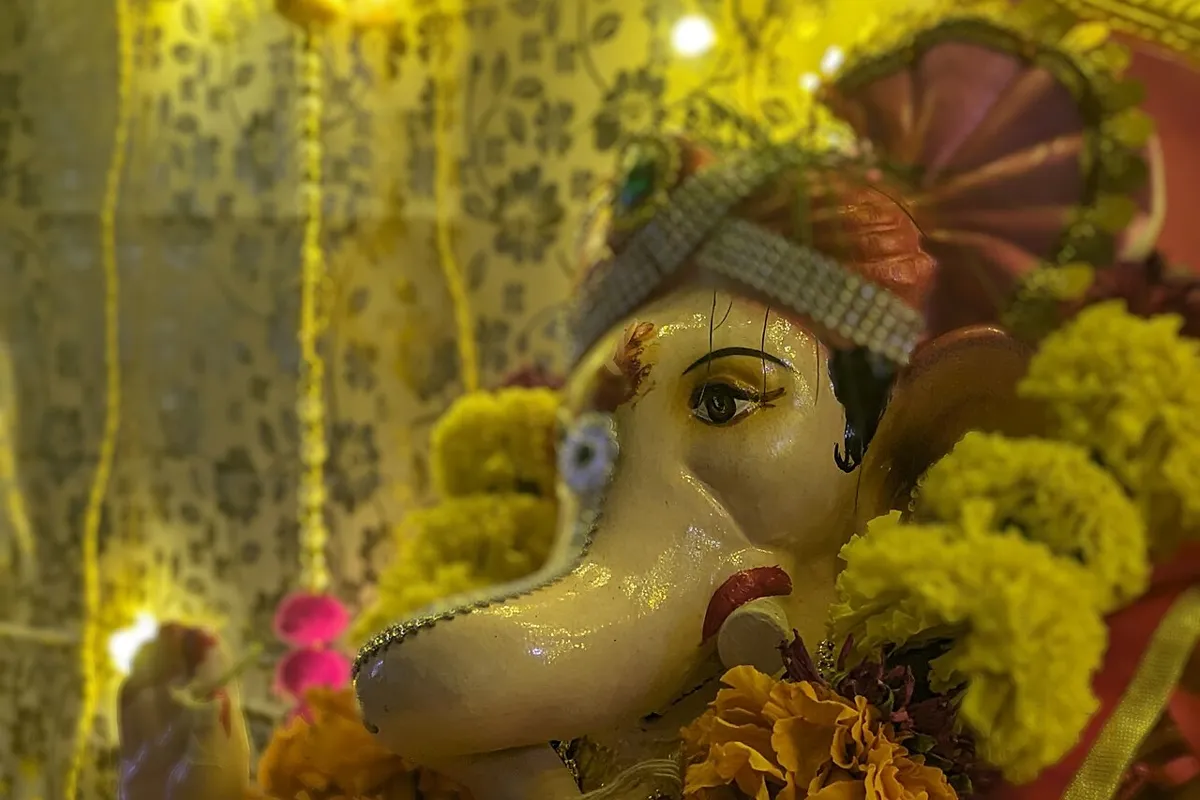
Ganadhipa Sankashti Chaturthi is on Friday, 27 November 2026 — and if you keep this fast, one number matters more than any other: in New Delhi, the moon rises at 8:18 pm. The Sankashti fast does not end at sunset, or after the evening aarti, or when dinner is ready. It ends when the moon is up and you have offered it arghya. Everything about this vrat is built around that moment.
Sankashti Chaturthi is the monthly fast of Lord Ganesha, kept on the Krishna Paksha Chaturthi — the fourth day of the waning moon. Each month's Sankashti carries its own name and its own form of Ganapati. November's is Ganadhipa, the lord of the ganas. Below: the tithi, the moonrise for your city, what to do if your calendar says 28 November instead, and how the fast is actually kept.
Ganadhipa Sankashti Chaturthi 2026 in India: date, tithi and moonrise
The Chaturthi tithi begins at 9:48 am on Friday, 27 November 2026 and ends at 6:39 am on Saturday, 28 November (IST). That long span is exactly why you will see both dates floating around. A calendar that simply prints the tithi against a sunrise can land on the 28th. But Sankashti is not decided at sunrise — it is decided at moonrise. The vrat belongs to the evening on which Chaturthi is running when the moon comes up, and that evening, everywhere in India, is Friday the 27th. If your family's calendar shows the 28th, this is why; follow the moonrise rule, or your temple's panchang, and you will be keeping the same fast as everyone else.
Moonrise on Friday, 27 November 2026, city by city (Drik Panchang):
| City | Moonrise |
|---|---|
| Kolkata | 7:46 pm |
| New Delhi | 8:18 pm |
| Hyderabad | 8:39 pm |
| Chennai | 8:40 pm |
| Bengaluru | 8:52 pm |
| Mumbai | 8:59 pm |
Nearly an hour and a quarter separates Kolkata from Mumbai, which is why a single "India moonrise time" is a small fiction. Check your own city's time on our Hindu Panchang Calculator before Friday, and if you are converting dates for family abroad, the Hindu Date Converter will give you the tithi for any Gregorian date.
United States: Friday 27 November, and a tight finish in New York
The vrat falls on Friday, 27 November 2026 in the United States as well — but look at New York closely. There, Chaturthi begins late on Thursday night (11:18 pm) and ends at 8:09 pm on Friday, while the moon rises at 7:49 pm. That leaves barely twenty minutes of Chaturthi after moonrise. Have the puja done and the arghya thali ready before the moon is due; this is not the evening to start looking for durva at 7:45.
Chicago, Houston and the West Coast
Chicago's moonrise is 7:41 pm and Houston's is 8:49 pm, both on Friday the 27th. In the San Francisco Bay Area (San Jose) the moon rises at 8:21 pm. The pattern to notice: the further west you are, the later the evening runs, but the date holds — Friday across the country.
United Kingdom: an early moonrise in London
London keeps Ganadhipa Sankashti on Friday, 27 November 2026, with moonrise at 6:49 pm. Chaturthi runs from 4:19 am on Friday to 1:10 am on Saturday local time, so unlike New York there is no squeeze at all — the tithi comfortably covers the evening. Late November in London means full dark well before the moon is up; on a clear night this is one of the easier Sankashti sightings of the year.
Canada: Toronto at 8:01 pm
Toronto observes the vrat on Friday, 27 November 2026, with moonrise at 8:01 pm. For Vancouver and the west coast, we could not verify a moonrise time we are willing to print — check your local temple's panchang rather than borrowing Toronto's, because the gap across Canada is measured in hours, not minutes.
United Arab Emirates: Dubai at 8:28 pm
In Dubai, Ganadhipa Sankashti is on Friday, 27 November 2026 and the moon rises at 8:28 pm. It is a working Friday for most people in the Emirates, so the shape of the day is familiar to anyone who has kept Sankashti in the Gulf: fast through the workday, puja at home in the evening, and arghya from a balcony or terrace once the moon clears the buildings. Give it a few extra minutes — a calculated moonrise assumes a flat horizon, and Dubai does not have one.
Australia: a late moonrise in Sydney
Sydney keeps the vrat on Friday, 27 November 2026, but be ready for a late one: moonrise is 10:59 pm. The tithi is still running at that hour, so the fast simply stretches — dinner will be close to midnight, and children and elderly parents keeping the fast may reasonably take fruit in the evening and complete the arghya with the family. For Melbourne and other cities, verify the time with your local panchang; Australian moonrises vary enough that Sydney's number should not travel.
Why this month is "Ganadhipa"
Every Sankashti has a name, a form of Ganapati and a seat (peetha) in the traditional Sankashti calendar. This month's form is Ganadhipa Maha Ganapati, worshipped on the Shiva Peetha. Ganadhipa means the chief of the ganas — Shiva's great retinue of attendants — the one who commands the commanders. In the North Indian (Purnimanta) reckoning this is the Sankashti of Margashirsha; in the Amanta calendar used in Maharashtra, Gujarat and the South, the same day falls in Kartika. Two month-names, one moonrise.
Next month the name changes again: December's fast is Akhuratha Sankashti Chaturthi, on Saturday, 26 December 2026. The full year of festivals, Sankashti dates included, is on our Hindu Festival Calendar 2027 page.
The Ganadhipa katha: the fast that carried Hanuman across the ocean
Each Sankashti has its own katha, and Ganadhipa's is a Ramayana story. In the telling, Goddess Parvati asks Ganesha which of his forms should be worshipped on the Margashirsha Chaturthi, and he names Ganadhipa — prescribing a full day's fast, arghya to the moon, and a havana of barley, sesame, rice, sugar and ghee for anyone who wants to overcome enemies. Then he tells her why the fast works.
Long before, King Dasharatha of Ayodhya, hunting in the forest, heard the sound of a vessel filling at a river and loosed a sound-guided arrow, believing it was an animal drinking. It was Shravana Kumar, a young man carrying his blind parents on pilgrimage, who had come down to fetch them water. The boy died, and his parents, broken-hearted, cursed the king: as they were dying of separation from their son, so would he. The curse travelled down the years. It was why Rama went into exile — and in the exile, Sita was taken, and the search for her reached the southern shore of India, where the ocean stood between Rama's army and Lanka.
There the vulture Sampati, who could see what others could not, told them the way across was Hanuman — and that Hanuman should first keep the Sankata Chaturthi fast, the fast of Ganadhipa. Hanuman kept it, and the strength and clarity he needed came: he rose, crossed the vast ocean in a single leap, and found Sita. That is the story read aloud on this Sankashti — a fast whose proof, in the tradition's own account, is an ocean crossed.
How to keep the Ganadhipa Sankashti vrat, step by step
Morning. Bathe, wear clean clothes, and take the sankalp — a simple spoken resolve that you are keeping the Ganadhipa Sankashti fast for the removal of obstacles. The fast runs from sunrise to moonrise. Most people keep it on vrat food: fruit, milk, sabudana khichdi, potatoes, peanuts, rajgira and water chestnut flour. Some keep it nirjala, without water; that is a personal capacity, not a requirement, and nobody's grandmother actually insists on it in a Delhi November if your health says otherwise.
Through the day. One meal of vrat food, or fruit and milk as your family custom runs. Grains, onion and garlic stay out. If you are abroad and fasting at work, the honest version most people manage is fruit, nuts, milk and one sabudana or potato meal — the tradition cares about the resolve and the moonrise ending more than about heroic suffering at a desk.
Evening puja. Before moonrise, bathe or wash, and set up Ganesha's puja: the idol or picture on a clean seat, a lamp, and the offerings he is known to love — durva grass (a bunch of 21 blades is the customary offering), red flowers, sindoor, akshat, and something sweet: modak if you can make or buy them, or laddoo of sesame and jaggery, which is this season's version. Offer with the mantra Om Gam Ganapataye Namah, and read or listen to the Ganadhipa katha above.
Moonrise and arghya. When the moon is up — 8:18 pm in Delhi, your city's time from the table — go out where you can see it. Offer arghya: water poured slowly from a small vessel, with sandal paste, rice and flowers, facing the moon. Look at the moon properly; on Sankashti, seeing it is the point, the one night of the month when the old story of the moon's curse is turned into a blessing. Then, and only then, break the fast — prasad first, then the meal.
If the sky is cloudy. It happens, in November, in half the world. The accepted practice is to offer arghya at the calculated moonrise time from your panchang, facing the direction of the moon, and break the fast. The fast ends at moonrise, not at a photograph of it.
Featured image: "Ganesh Murti – Traditional Idol of Lord Ganesha 011" by Shoot stufz, CC BY-SA 4.0, via Wikimedia Commons.